
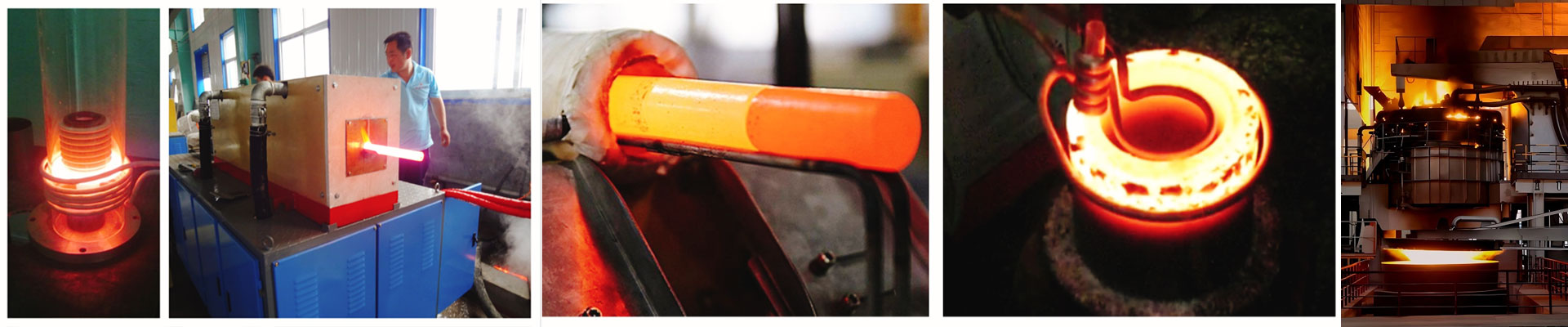
There's a rhythm to running an electric arc furnace that you only pick up after spending time in the melt shop. Each heat follows a sequence, but the difference between a 45-minute heat and a 90-minute heat usually comes down to how well you execute the fundamentals. This guide walks through each stage of the oxidation process—still the standard for most shops—and explains not just what to do, but why it matters.
The Oxidation Process: Still the Workhorse
Why the Oxidation Method Earned Its Place
If you're melting carbon or low-alloy steel, or really any grade where gas and inclusion control matters, the oxidation method is what you'll use. The defining feature is a dedicated oxidation period where you blow oxygen, drive off carbon, and let the resulting CO bubbles "scrub" the bath. That scrubbing action pulls out hydrogen, nitrogen, and non-metallic inclusions in a way that no other part of the process can match.
You'll run an oxidation heat when:
- You're making carbon or low-alloy steel
- The steel needs tight gas and inclusion control
- Your scrap is mixed or unknown composition (so you need the cleanup that oxidation provides)
- Phosphorus and sulfur removal are both requirements
The Six-Stage Sequence
Every oxidation heat follows the same skeleton:
Furnace repair → Charging → Melting → Oxidation → Reduction → Tapping
Each stage has a distinct job. Let's go through them in order.
Stage 1: Furnace Repair
Why You Can't Skip This
The furnace lining takes a beating every heat—thermal shock, mechanical impact from charging, chemical attack from the slag, and arc radiation all day. If you don't repair systematically, you'll lose the bottom, burn through a wall, or drop a tap hole. None of those are cheap repairs.
Good repair practice does a few things at once:
- Fixes damaged areas before they become failures
- Maintains the hearth shape so your molten pool depth stays consistent
- Seals cracks that would let molten steel penetrate to the furnace shell
- Extends campaign life, which is where your refractory budget goes
How to Do It Right
Timing. Get it done while the lining is still hot. The residual heat helps sinter the repair material in place. In practice, you want the repair done within 10 to 15 minutes after tapping. Much longer and the lining cools enough that your repair material won't sinter properly.
Materials. Magnesium-based EAFs use magnesite (MgO) or dolomite (MgO·CaO) with a binder—either tar or water glass. Coarse particles for big repairs, fine powder for detail work.
Methods. You've got options depending on the situation:
- Throwing the repair material onto the hot spot and letting the heat sinter it—fast, rough, and fine for minor wear.
- Patching with a tool for localized damage.
- Hot gunning—spraying refractory slurry onto the walls with a lance. This is the modern standard for anything beyond spot repairs. It's fast, it covers large areas evenly, and it works with the furnace heat.
What to watch. The tap hole and the slag line are your highest-wear zones. Check them every heat. Keep repair layers under about 30 to 50 mm per application—too thick and they won't sinter properly before you charge again.
Stage 2: Charging
The Rules That Actually Matter
How you load your scrap determines how your entire heat goes. A bad bucket layout means bridging, slow melt, and wasted time.
The principles are straightforward:
- Density matters. You want the arc to penetrate into the charge, not just dance on top of it.
- Distribute, don't cluster. Piling all your heavy scrap in one spot creates a cold spot that refuses to melt.
- Heavy on the bottom, light on top. It sounds obvious, but it's violated constantly. Bottom layer: heavy scrap. Middle: medium. Top: light scrap and loose material.
- Tuck your additives in. Lime, coke, recarburizer—disperse them through the bucket, not all in one pile.
How Modern Shops Charge
Two methods dominate.
Swing-roof charging is what most shops use. Lift the roof, swing it open, drop the bucket. Fast, flexible, and you can see what you're doing. Most heats need two or three buckets.
Consteel (continuous charging) is a different animal. Scrap feeds continuously from the side of the furnace on a conveyor while you're melting. Combined with eccentric bottom tapping (EBT), it lets you run basically non-stop. The arc never shuts off. The heat loss plummets. The power grid likes it better too, because the load is steadier. The tradeoff is capital cost and process complexity, but for high-throughput shops it's hard to beat.
How Much to Charge
Your furnace capacity and transformer power set the upper bound. Aim for 85 to 110 percent of rated capacity in the molten heat. Underfill and you're wasting transformer capacity. Overfill and you're tapping short or splashing over.
When you're proportioning the bucket, think about:
- What scrap types you have and their densities
- Whether you're including hot metal (and how much)
- What your alloy return inventory looks like
- Where your carbon, phosphorus, and sulfur are starting from
Stage 3: Melting
Why This Stage Costs You the Most
The melting period is where 50 to 60 percent of your tap-to-tap time disappears and 60 to 70 percent of your electricity gets consumed. If you're looking for productivity gains, this is the first place to look.
The melting stage has four distinct phases, and each needs different handling.
The Arc Strike
Power on. Electrodes drop. They touch the scrap, current flows, then they lift and the arc strikes. In these first minutes the arc is completely exposed—it's radiating straight up at your roof and sideways at your walls. Run lower voltage here. Some operators add coke or electrode scrap to the strike zone to help stabilize the arc. It's a small detail that pays off in roof life.
Borehole Formation
The arc burns down into the scrap, creating a "borehole." You want this to happen fast—get the arc buried in the charge where its heat actually does something useful. Once the electrodes penetrate, you can run higher power without roasting your roof. This is where high-sensitivity electrode regulation matters. A slow electrode response here costs you time.
Molten Pool Formation
As scrap melts, your pool grows. Now add your first batch of lime. You want slag covering the bath as soon as possible—it cuts gas pickup, reduces heat loss, and starts phosphorus removal. Once the pool is deep enough, start oxygen blowing. It accelerates the melt and gets you into the oxidation period faster.
comprehensive Melting
With a solid pool established, ramp up the oxygen and bring in the oxy-fuel burners if you have them. Keep adjusting slag basicity and fluidity so you're ready when the oxidation period starts. A well-prepared bath at the end of melting means a short, clean oxidation period.
Squeezing Time Out of the Melt
A few things that actually move the needle:
- Good bucket layout to minimize borehole time
- Oxy-fuel assist to heat the scrap the arc can't reach
- Foamy slag as early as possible to trap arc heat in the bath
- Keep the roof closed. Every time you open up, you dump heat. Plan your additions so you're not popping the roof unnecessarily.
- Match your power curve. Running max power when the arc is fully exposed just eats your roof. Learn your furnace's optimal power profile for each stage.
Stage 4: Oxidation
What You're Actually Doing Here
The oxidation period is where the metallurgical heavy lifting happens. You've got five distinct jobs:
Dephosphorization — get phosphorus below spec (usually ≤0.025%).
2. Decarburization — blow oxygen, drop carbon to target.
3. Gas removal — let CO bubbles scrub H₂ and N₂ out of the bath.
4. Inclusion removal — CO bubbles carry inclusions to the surface.
5. Temperature rise — the C–O reaction is exothermic; every 0.01% carbon you remove raises bath temperature by about 2–3°C.
Dephosphorization: Getting Phosphorus Out
Phosphorus removal is a slag chemistry game. You need four things:
- High basicity. Aim for a CaO/SiO₂ ratio of 2.5 to 4.0.
- Oxidizing slag. FeO in the slag needs to be 15 to 25 percent. Without it, phosphorus stays in the metal.
- Lower temperature early. Phosphorus distribution favors the slag at lower temperatures. Start dephosphorizing while the bath is still relatively cool, then remove the phosphorus-rich slag before you heat up for decarburization.
- Enough slag. Skimp on slag volume and you limit how much phosphorus the slag can absorb.
Practical tip: start building high-basicity, high-iron-oxide slag at the end of the melting period. Get the phosphorus moving early. Once you've got it out, remove that slag before you start heavy decarburization. If you don't, phosphorus will "revert"—it goes back from the slag into the metal when the slag chemistry changes during decarburization. It's a classic mistake and it's entirely avoidable.
Decarburization: The CO Boil
Oxygen blowing drives carbon down. The CO gas that forms creates a vigorous boil—and that boil is doing more than just removing carbon. It's stirring the bath (homogenizing temperature and chemistry), it's carrying hydrogen and nitrogen out as bubbles rupture at the surface, and it's giving inclusions a ride to the slag where they get absorbed.
A few guidelines:
- Decarburize by at least 0.2% if you want the gas-scrubbing benefit. A token 0.05% decarb doesn't do much.
- Control the blow rate. Too aggressive and you're splashing molten steel out of the furnace. Too timid and the boil is ineffective.
- Watch your endpoint. Sample before you think you're done. Undershoot and you're tapping high-carbon steel. Overshoot and you're recarburizing—which works, but it costs you time and alloy.
Temperature Management in Oxidation
You want to exit the oxidation period about 10 to 20°C below your tapping temperature. Why? Because the reduction period involves adding alloys and deoxidizers, and that's endothermic. Your bath will cool a bit. Exiting oxidation at roughly 1550 to 1600°C (depending on grade) usually puts you in the right ballpark.
Slag Removal
Once oxidation is complete, get that oxidizing slag out. All of it. It's loaded with phosphorus and iron oxide, and if it stays in the furnace during reduction, it'll work against you—rephosphorization, reoxidation, all of it. Quick removal, then get a new reducing slag made as fast as you can.
Stage 5: Reduction
The Four Jobs of Reduction
The reduction period is where you finish the steel:
Deoxidation — get dissolved oxygen to the lowest level you can.
2. Desulfurization — under a well-maintained reducing slag.
3. Alloying — add alloying elements to hit your target chemistry.
4. Temperature adjustment — hit your tapping temperature.
Deoxidation: Combined Precipitation + Diffusion
Modern practice uses both mechanisms. Right after slag removal, add a strong deoxidizer (aluminum, silicon-manganese) directly to the exposed bath. That's precipitation deoxidation—fast, gets oxygen down quickly. Then make your reducing slag (white slag or carbide slag) and maintain it. The slag gradually pulls more oxygen out of the bath via diffusion deoxidation. The combination gets you cleaner steel than either method alone.
White slag (CaO-based, low FeO, appears white) and carbide slag (contains CaC₂, appears gray-black) are both capable. White slag is more common. Carbide slag has stronger deoxidizing power but is trickier to maintain.
Desulfurization
Sulfur comes out under:
- High basicity (≥3.0)
- Low FeO (≤1% — this is why you need a good reducing slag)
- High temperature (有利于 the reaction kinetically)
- Good stirring (keeps steel and slag in contact)
Under white slag, you can pull 50 to 70 percent of the sulfur out. A well-run reduction can get you below 0.02% S in the final steel.
Alloying: Adding Elements in the Right Order
Not all alloys are created equal when it comes to oxidation risk. The rule: add the Robust elements early, the easily oxidized ones late.
Oxidation Risk Examples When to Add
Low (recovery ~100%) Nickel, ferromolybdenum, copper End of oxidation or early reduction
Moderate Ferromanganese, ferrochrome, ferrosilicon After pre-deoxidation in reduction
High Aluminum, ferrotitanium, ferroboron 5–10 minutes before tap
Very high / special handling Rare earth elements In the ladle during tapping
After you add alloys, stir the bath and sample. Confirm your chemistry before you tap. Re-sampling is cheaper than missing your target.
Nailing the Tap Temperature
Your tap temperature depends on your grade, your casting method, and what comes next (LF? Continuous caster? Ingot?). Measure the temperature. If you're hot, you can cut power and wait, or toss in some light scrap to cool the bath. If you're cold, apply power—carefully, because a cold bath that you're heating at the end of reduction is a bath that's picking up more inclusion contamination from a long hold time.
Stage 6: Tapping
When to Tap
Don't tap until you're sure:
- Chemistry is on spec (or better, at your internal target)
- Temperature is at the tapping requirement
- You've held reducing slag for at least 10 minutes (white slag maintenance time)
- The bath is well-deoxidized
How to Tap
Modern EAFs use eccentric bottom tapping (EBT). Tilt the furnace, the steel flows out the bottom eccentric tap hole, and slag stays mostly in the furnace. It's a fundamentally better design than the old spout tap—less slag carryover, less mechanical stress on the furnace, faster tap.
During tapping, add your final deoxidizer (aluminum wire, typically) to the ladle stream. Once the heat is tapped, tilt back, check your lining, and get ready for the next heat.
Two Alternative Processes Worth Knowing
The Non-Oxidation (Charge) Method
Skip the oxidation period entirely. Melt your charge, then go straight to reduction. The upsides: short cycle (20 to 30 percent faster than oxidation heats), low power consumption, and essentially 100 percent alloy recovery (nothing gets oxidized out). The downsides: you can't remove phosphorus, you can't scrub gas and inclusions with a CO boil, and you need clean, known-composition scrap. This method works well when you're melting known-grade returns into the same grade—stainless returns into stainless, for example.
The Return-Oxygen Method
A hybrid. Use alloy returns as your primary charge, melt, then do a short oxygen blow—just 0.1 to 0.3% decarburization. You get a brief CO boil for gas and inclusion removal, but you don't oxidize away a meaningful amount of your expensive alloying elements. This is the standard approach for stainless and high-speed tool steels where you want the cleanup of oxidation without the alloy loss.
Basic vs. Acidic Furnaces
Why Basic Dominates
Basic EAFs (magnesite or dolomite lining, CaO-based slag) can dephosphorize and desulfurize. That single capability decides the question for most shops. Basic furnaces can handle high-phosphorus scrap, they can make clean steel, and they can cover essentially any grade.
Yes, basic refractory costs more and campaign life is shorter than acidic. But the process flexibility is worth it. Basic furnaces account for well over 90 percent of all operating EAFs.
Where Acidic Still Exists
Acidic furnaces (silica lining, SiO₂ slag) can't dephosphorize or desulfurize. Your scrap had better be clean. In exchange, you get fast temperature rise, long lining life, and short heats. A few foundries still run acidic EAFs for specific casting applications, but for steel mills, it's an increasingly rare choice.
Temperature and Slag: The Hidden Levers
Temperature Control Through the Heat
Temperature runs the entire process. Too cold and reactions stall, slag won't flow, and alloys won't dissolve. Too hot and you're eating linings, picking up gas, and possibly damaging your continuous caster's mold if you're feeding it directly.
Here's what experienced melters target:
Stage Temperature Range
End of melting 1500–1550°C
Oxidation 1550–1650°C
Reduction 1550–1650°C
Tapping 1580–1680°C (grade-dependent)
Slag Control Fundamentals
Slag is sometimes called the "third element" of steelmaking, and it's not an exaggeration. Your slag control checklist:
- Basicity: 2.5–4.0 in oxidation, 3.0–4.0 in reduction
- Slag volume: 2–5% of the molten steel weight
- Fluidity: Adjust with fluorspar, but don't overdo it
- Oxidizing vs. reducing character: High FeO in oxidation, low FeO in reduction. This transition—clean slag removal followed by fresh reducing slag—is the single most important action in the entire reduction period.
- Foamy slag depth: In UHP furnaces, you want the slag layer 1.5 to 2 times the arc length. That buries the arc and protects the walls.
Every EAF operator develops their own rhythm and their own rules of thumb. The fundamentals, though, are the same everywhere: respect the oxidation period, maintain your slag, and never shortcut the basics. The technology keeps evolving—oxy-fuel, foamy slag automation, continuous charging—but the underlying sequence hasn't changed in decades, because it works.
