
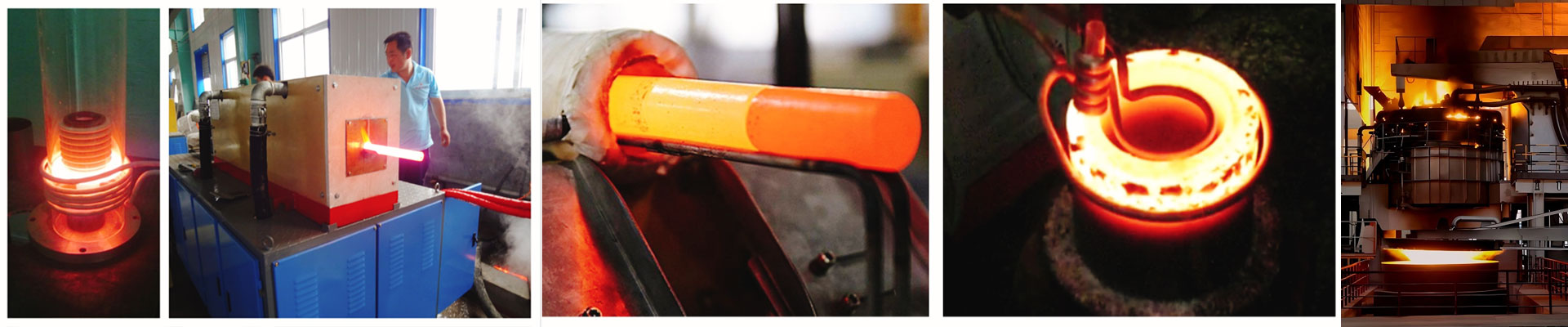
If there's one thing that separates a smooth EAF heat from a miserable one, it's raw material quality. Your scrap bucket is your cheapest raw material—and sometimes your most problematic. Get the burden right and the melt flies; get it wrong and you're fighting phosphorus spikes, excessive tap-to-tap time, and alloy losses. This guide covers what actually goes into an EAF, what to watch for, and how experienced operators manage the variables.
Scrap Steel: The Heart of the Process
Why Scrap Quality Controls Everything
In most EAF shops, scrap makes up 60 to 100 percent of the metallic charge. That means the chemistry, density, and cleanliness of your scrap directly determine how your heat runs. A well-sorted bucket of known-grade returns melts faster, needs less corrective chemistry, and produces cleaner steel. A bucket of mystery scrap? That's a gamble you'll pay for in time and additives.
The point isn't just theoretical. Scrap quality affects:
- How fast you melt (density and sizing matter enormously)
- How much phosphorus and sulfur you're fighting in the oxidation period
- Whether residual elements (Cu, Sn, Cr, Ni) push you out of specification
- How much hydrogen you pick up (rusty, oily scrap is a real problem)
- How safely you can charge (sealed containers kill people)
Sorting Scrap: Purchased vs. Home Returns
In practice, scrap falls into two broad categories, and you manage them very differently.
Purchased scrap comes from wherever the scrap dealer found it—demolition sites, end-of-life vehicles, machinery breakers. The composition is whatever it is, and you may not know exactly what that is. Within purchased scrap, a few subcategories matter:
- Heavy scrap: Plate, billets, structural sections thicker than 6 mm. Dense, slow to melt, but high yield. Good for the bottom of the bucket.
- Medium scrap: 3–6 mm thickness. Section steel, pipe, machinery parts. This is your workhorse charging material.
- Light scrap: Thin sheet, tinplate, wire. Low density, high volume. Bale it before it goes in the bucket or you'll be charging all day.
- Shredded scrap: Auto bodies and the like, processed through a shredder. Consistent sizing, moderate bulk density, relatively clean. Many shops prize it for consistent melt behavior.
Home returns (also called internal scrap) are the crop ends, rejects, and rolling scrap your own mill generates. The chemistry is known because you made the steel in the first place. This is premium raw material—especially for alloy grades where you want to recover costly elements like nickel, molybdenum, or chromium. Sort it by grade, store it separately, and use it wisely. A bucket of 304 stainless returns going into a 304 heat is essentially pre-alloyed scrap. That's real money saved.
What "Good" Scrap Looks Like
Experienced scrap buyers develop an eye for this, but here are the non-negotiables:
Clean surface, minimal rust. Rust means moisture, and moisture means hydrogen pickup. Worse, trapped water turning to steam in the molten bath can cause violent eruptions—a real safety hazard. Oily scrap is no better; it burns off as smoke and loads up your baghouse. The best shops have a weather-protected scrap yard. If you're buying scrap that's been sitting in the rain, you're asking for trouble.
No non-ferrous metals. Copper and tin are the big enemies. They don't氧化 out in the furnace—what goes in stays in. Copper above about 0.3% starts causing hot-shortness problems in rolling. Tin makes it worse. Aluminum, lead, zinc—none of these belong in your bucket. Good scrap yards run separation systems, but as a mill, you need your own incoming inspection. Spark testing and spectrometry aren't optional; they're basic quality control.
Absolutely no sealed containers. This is a safety rule, not a quality rule, but it belongs here because the consequences are severe. A sealed pipe or gas cylinder heats up, pressure builds, and it can explode inside the furnace. People have died this way. Every scrap yard that supplies an EAF shop needs a rigorous inspection and sorting protocol. No exceptions.
Known chemistry. For purchased scrap, this is the hard part. You can spark-test carbon and alloy content roughly. You can run a spectrometer on a sample. But for mixed loads, you're often working with incomplete data. Sort by grade when you can. For everything else, keep it separate until you know what you've got.
Reasonable size and bulk density. Scrap that's too long won't go through the furnace door and can bridge in the bucket or the furnace—creating a scrap arch that refuses to melt. As a rule, nothing should exceed about one-third to one-half the furnace mouth diameter. Bulk density matters too: too light and you're charging three buckets for one heat; too dense and the arc can't penetrate, leaving unmelted material at the bottom. The sweet spot is roughly 0.6 to 1.5 t/m³.
Sulfur and phosphorus control. Ordinary scrap should ideally run below 0.05% S and 0.05% P. High-phosphorus scrap isn't a dealbreaker, but it stretches your oxidation period and burns through more slagging material. Know what you're buying.
Alloying Materials: Getting the Chemistry Right
What These Actually Do
Alloying materials adjust your molten steel's chemistry so the final product meets spec. Some are primarily deoxidizers that also add alloy content (silicon, manganese). Others are pure alloying additions (nickel, molybdenum, chromium). The art is adding them at the right time, in the right proportion, to hit your target without wasting expensive elements.
The Common Ferroalloys
If you've spent time in a ferroalloy warehouse, you know the inventory list is long. Here are the ones you'll actually use in every heat:
Ferrosilicon (FeSi). 75% Si grade is the workhorse. It deoxidizes and adds silicon. Size matters—too large and it won't dissolve before tap; too fine and you lose it to the dust collector. 10–50 mm is typical.
Ferromanganese (FeMn). Comes in high-carbon (2–8% C), medium-carbon (0.7–2% C), and low-carbon (≤0.7% C) grades. Your choice depends on what carbon level you can tolerate when you add it. If you're finishing a low-carbon heat, high-carbon FeMn is a poor choice.
Ferrochrome (FeCr). Essential for any stainless or alloy steel heat. High-carbon, medium-carbon, low-carbon, and extra-low-carbon grades are all available. Stainless steel shops burn through extraordinary quantities of low-carbon ferrochrome. It's expensive—handle it carefully.
Ferromolybdenum (FeMo). Roughly 55–65% Mo. Used in alloy structural steels and tool steels. Molybdenum is pricey; recovery matters. Add it after deoxidation is well underway or you'll lose too much to oxidation.
Other specialty ferroalloys. Ferrotungsten for high-speed steels. Ferrovanadium for micro-alloying (strength and toughness). Ferrotitanium for deoxidation and grain refinement. Ferroboron for trace boron additions. Each has its niche.
Pure Metals
Sometimes a ferroalloy won't do. You need the pure element:
- Nickel: Electrolytic nickel plates or pellets. Essential for Ni-bearing grades. Non-oxidizable, so you can add it early.
- Aluminum: A powerful deoxidizer. Added as wire, shot, or ingot. Goes in late—aluminum oxidizes readily and you'll lose what you add too early.
- Metallic manganese: Used when you need manganese without the carbon that comes with high-carbon ferromanganese.
How to Select and Handle Alloying Materials
A few principles that experienced melters live by:
- Know your analysis. Every alloy batch needs a mill cert. If the supplier can't provide one, find a different supplier.
- Size appropriately. Nothing should exceed about 100 mm. You want it to dissolve quickly and completely in the bath.
- Keep it dry. Moisture means hydrogen. Bake alloys before they go in the furnace or the ladle. This is especially critical for fine alloys like ferrovanadium or aluminum.
- Think about cost. If you can achieve the same deoxidation with a silicon-manganese alloy instead of separate ferrosilicon and ferromanganese additions, do it. It's usually cheaper and always simpler.
Slag-Forming Materials: Making the Slag Work for You
Why Slag Matters More Than You Think
Novices focus on the molten steel. Experienced melters focus on the slag. The slag is where the real metallurgy happens—phosphorus and sulfur come out through the slag, inclusions get absorbed, the arc gets shielded, and the lining gets protected. Get your slag practice wrong and nothing else goes right.
Lime (CaO): The Foundation
Lime is the single most important slag-forming material in an EAF. You want soft-burned (active) lime—calcined at 900–1100°C, porous, high surface area, fast-dissolving. Hard-burned lime (1200–1400°C) is denser and slower to react. It works, but it makes your life harder.
What to look for in your lime:
Parameter Target
CaO content ≥85% (≥90% for active lime)
SiO₂ ≤3%
Sulfur ≤0.05%
Particle size 10–50 mm
Under-burning / over-burning Minimal
If your lime supplier is shipping you over-burned material, have the conversation. It affects your slag formation time and your desulfurization efficiency.
Fluorspar (CaF₂): The Flux
Fluorspar lowers slag melting point and viscosity. You need it to get early slag formation moving in the melt period and to keep reduction slag fluid. But use it judiciously—over 15 to 20 percent of your lime weight starts eating your furnace lining and puts fluorine into your dust collection system. Environmental regulations in many regions now restrict fluorine emissions, so this is increasingly a compliance issue as well as a refractory issue.
Dolomite (CaCO₃·MgCO₃): Furnace Lining Protection
Calcined dolomite adds MgO to your slag. Why does that matter? Because your furnace lining is magnesia-based. A slag that's low in MgO will dissolve your lining to satisfy its own equilibrium. A slag with adequate MgO leaves your lining alone. It's a simple concept that pays off in refractory life.
Other Slag Materials
Limestone (CaCO₃) can sub for lime in a pinch, but it endothermically decomposes in the furnace, absorbing heat. Use it sparingly.
Clay brick pieces find occasional use in reduction-period slag adjustment when you need to lower basicity.
Bauxite (Al₂O₃) can stabilize slag and improve its performance in certain high-alloy heats.
Oxidizing Agents: Driving the Cleanup Reactions
Oxygen: The Primary Tool
Oxygen is blown through a lance into the bath. It does three things simultaneously: decarburizes (generating CO that boils the bath), oxidizes phosphorus for removal, and releases heat that helps melt the scrap. Modern EAFs use multiple oxygen injection points—lance, wall injectors, even bottom stirring—to get thorough bath contact.
Oxygen pressure and flow rate are tuned to the heat stage. Too aggressive too early and you'll have molten steel splashing out of the furnace. Too little and your oxidation period drags on.
Iron Ore and Mill Scale
Iron ore (Fe₂O₃) adds oxygen the old-fashioned way—it decomposes in the hot bath and releases oxygen. It's slower than lance oxygen but useful as a supplemental oxidizer, especially in the early melt when you're forming an oxidizing slag.
Mill scale (Fe₃O₄) is the oxide scale knocked off during rolling. It's cheap, it's an oxidizer, and it's a slag former. Many shops treat it as a free byproduct. Use it.
Using Oxidizers Safely and Effectively
A few rules that prevent headaches:
- Don't dump oxidizers in before you've got a molten pool. Cold oxidizer on solid scrap just gets absorbed and does nothing useful.
- Add iron ore in small batches. Dumping a large quantity of cold material into a hot bath can crash your temperature.
- Control your oxygen blow. Vigorous boiling is good; molten steel erupting out of the furnace is not.
Deoxidizers: Cleaning Up the Bath
The Strength Spectrum
Deoxidizers range from powerful to mild. You use them in a deliberate sequence:
Strong deoxidizers — Aluminum is the big one. Tremendous affinity for oxygen. Usually added as final deoxidation, 0.1 to 0.3% of heat weight. Aluminum-manganese-iron composites combine aluminum's strength with manganese's alloying value.
Medium-strength deoxidizers — Ferrosilicon (75% Si) is the standard precipitation deoxidizer. Ferromanganese pulls double duty as deoxidizer and alloy addition. Silicon-manganese alloy (SiMn) is a composite that works better than the two separate additions—better recovery, less inclusion formation.
Weak deoxidizers — Carbon, via the C–O reaction, is the classic diffusion deoxidation tool for the reduction period. Manganese is weak but helps shape the deoxidation products so they're easier to remove.
How Deoxidation Actually Works in Practice
You have two fundamental mechanisms, and you'll typically use both:
Precipitation deoxidation means adding the deoxidizer directly into the molten steel. The deoxidation products form and float out. It's fast and straightforward, but some products inevitably get trapped before they can float out.
Diffusion deoxidation means adding the deoxidizer to the slag, not the steel. By reducing the oxygen activity in the slag, you create a driving force for oxygen to diffuse out of the steel and into the slag. It's slower but produces cleaner steel.
Modern practice almost always combines them: precipitate-deoxidize first to get a quick oxygen reduction, then diffusion-deoxidize under a well-maintained reducing slag to get the bath as clean as possible.
Recarburizers: When You Need More Carbon
The Common Options
Sometimes your bath comes in under-carbon. You need to add carbon, and you want good recovery. Your options:
- Electrode scrap: Graphite, high carbon (≥95%), low sulfur, excellent recovery. This is the premium choice.
- Petroleum coke: High carbon, low ash, decent recovery. Watch the sulfur content.
- Pitch coke: Good carbon content, low ash, solid recovery performance.
- Pig iron: Adds carbon (3.5–4.5%) and also brings silicon and other elements. An indirect but sometimes useful recarburization route.
Making Recarburization Work
Recovery runs 80 to 95 percent, but it depends on how you do it. Add recarburizer when you have good bath stirring—you want it to dissolve fast and distribute evenly. Dry it first. Add large quantities in batches; dumping it all at once can overshoot your target and leave you tapping an over-carbon heat, which is a very expensive mistake.
The Rest of the Inventory
Furnace Repair Materials
After every heat (or every few heats, depending on wear), you're patching the bottom and walls. Magnesite (MgO) and dolomite are the standard repair materials. Tar or sodium silicate serves as binder. Hot gunning—spraying refractory material onto the hot furnace walls—is the modern standard for large-area repairs. It's fast and it works with the residual heat to sinter the repair material in place.
Hot Metal as a Charge Component
This deserves more attention than it gets in many textbooks. Adding 20 to 40 percent hot metal to your EAF charge is a genuine game-changer:
- Sensible heat plus chemical heat from oxidation of carbon and silicon can cut power consumption by 100–200 kWh per ton.
- Tap-to-tap time drops by 10–20 minutes.
- The hot metal dilutes residual elements from scrap, giving you cleaner chemistry to start with.
The tradeoff is that you need a source of hot metal—either from your own blast furnace or from a nearby integrated mill. But where it's available, hot-metal charging has become standard practice for modern high-productivity EAF shops.
Raw material management won't ever be the glamorous part of steelmaking. But get it right and everything else becomes easier. The mills that treat scrap sorting, alloy inventory, and slag practice as core technical disciplines—not just purchasing decisions—are the ones that consistently hit their quality, cost, and productivity targets.
