
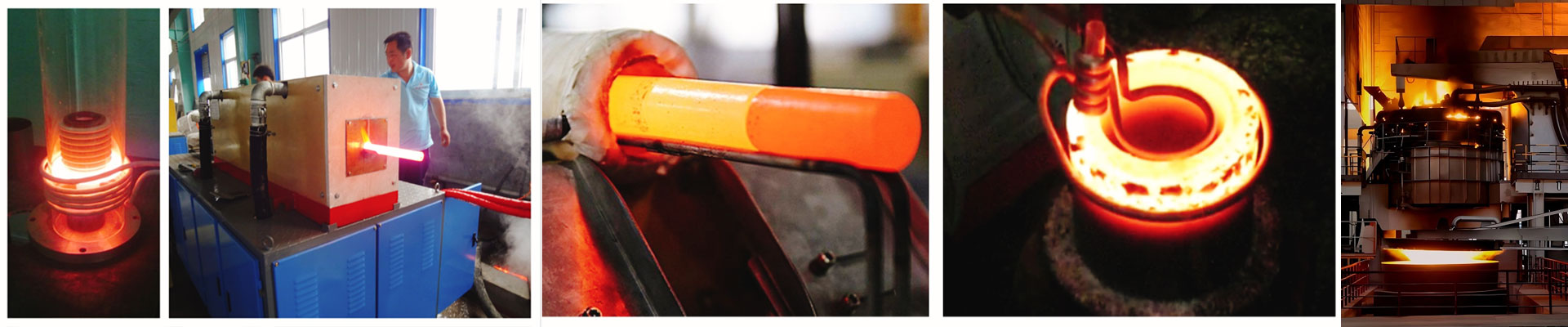
Walk into any melt shop today and one piece of equipment dominates the conversation: the electric arc furnace. What began as a niche tool for specialty steels in the early 1900s has evolved into a global workhorse, now responsible for roughly 25 to 30 percent of the world's crude steel output. Driven by tighter environmental regulations, cheaper electricity in many markets, and the sheer flexibility of the process, EAF steelmaking has earned its place alongside the blast furnace–converter route as a core steelmaking technology.
This guide walks through the fundamentals: how an arc furnace actually works, where the technology came from, what it does well (and where it struggles), and why it matters for the future of the industry.
Where It All Started—and How We Got Here
What an Electric Arc Furnace Actually Does
Strip away the complexity and the concept is straightforward. An EAF converts electrical energy into intense heat by striking an arc between graphite electrodes and the furnace charge. That arc isn't subtle—core temperatures can exceed 6,000°C, easily hot enough to melt scrap, pig iron, DRI, or any combination thereof. Unlike a basic oxygen furnace, which relies on the chemical heat of molten iron, an EAF runs primarily on electricity. That single difference opens up a lot of operational flexibility, as we'll see.
The physics behind it is plasma discharge. When current jumps the gap between the electrode tip and the scrap, it ionizes the gas and creates a plasma arc. The heat radiates, conducts, and convects into the charge until you've got a molten pool. From there, the real metallurgy begins.
A Century of Evolution
The timeline is worth knowing because it explains why modern furnaces look and operate the way they do:
Year / Era Milestone
1900 Paul Héroult (France) builds the first industrial EAF—small, crude, but groundbreaking
1920s–30s EAFs stay niche: alloy and specialty steels only, furnace sizes typically under 5 tons
1926 Germany introduces the swinging-roof furnace, speeding up charging and boosting productivity
1950s–60s Power grid expansions let EAFs move into ordinary carbon steel production
Late 1960s Union Carbide proposes Ultra-High Power (UHP). This changes everything—melting times collapse, productivity soars
1970s Furnace sizes break the 100-ton barrier; EAFs are no longer "small shop" equipment
1980s Secondary metallurgy (LF, VD, etc.) integrates with EAFs—process control takes a leap forward
1990s DC furnaces, twin-shell designs, and shaft furnaces all hit the market
2000s–present Intelligent control systems, coherent oxygen jets, foamy slag automation, and green-power integration define the modern era
That 1960s UHP breakthrough deserves a moment of appreciation. Before it, a heat could easily take three to four hours. After it, 40- to 60-minute heats became achievable. The entire economics of EAF steelmaking shifted.
How an EAF Actually Works
The Arc and the Heat
Three things happen when you fire up an EAF:
Striking the arc. The electrodes drop until they touch the scrap, current flows, then they lift slightly. An arc forms in the gap. In those first few minutes the arc is chaotic and exposed—this is when roof life takes a beating if you're not careful.
2. Melting. The arc radiates into the scrap. As a molten pool forms, the arc buries itself in slag and metal, and heat transfer becomes far more efficient. This is where 50 to 60 percent of your total tap-to-tap time disappears.
3. Refining. Once you've got a molten bath, the slag chemistry and temperature control take center stage—dephosphorization, desulfurization, deoxidation, alloying. The EAF is no longer just a melter; it's a refining vessel.
Where does the heat actually come from? Roughly 40 to 50 percent is direct arc radiation—the big hitter. Convective heat transfer from hot gases accounts for a meaningful slice, and resistance heating through the slag layer adds the rest. Understanding that split matters because it tells you where to look when your melt rate is lagging.
Thermal Behavior You Need to Know
A few thermal realities shape every EAF campaign:
- Thermal efficiency runs 60–70% for a modern furnace. That's genuinely good for an industrial process, but it also means 30-plus percent of your energy is leaving as lost heat, dust, or cooling-water load. There's always room to tighten that up.
- Temperature control is precise. Adjust the power input and you can nail a target within ±5°C. For temperature-sensitive grades, this is a genuine advantage over the BOF route.
- Melting rate in UHP furnaces can hit 3 to 5 tons per minute. That's fast—but only if your scrap loading, oxygen practice, and power curves are all dialed in.
- Temperature distribution is inherently uneven. The area under the arc is scorching; the far side of the bath, not so much. This is why stirring—whether electromagnetic in a DC furnace or gas-driven in an AC furnace—isn't optional. It's essential.
Strengths, Weaknesses, and How EAFs Compare
Why Mills Choose EAFs
Ask any plant manager and the answers come quickly. Capital cost is near the top of the list—an EAF shop runs about one-third to one-half the investment of a comparable BOF shop. You skip the blast furnace, the coke ovens, the sinter plant. Land footprint shrinks. Construction time drops to 12 to 18 months instead of 24 to 36. If you're a greenfield project with limited capital, that's a compelling argument.
Then there's raw-material flexibility. An EAF doesn't care whether it's melting 100% scrap, a scrap–hot-metal mix, DRI, HBI, or some combination. That adaptability extends to steel grades too—carbon steels, alloy steels, tool steels, stainless, bearing steel—an EAF can handle them all. And because you're not tied to a blast furnace's iron chemistry, you can pivot from one grade to another much faster than a BOF shop can.
The environmental case is getting harder to ignore. Compared with the blast-furnace–BOF long route, an EAF's CO₂ emissions are 60 to 70 percent lower. Dust emissions drop by about 80 percent. For mills under pressure to decarbonize—and that's increasingly all of them—the EAF short route is a strategic asset.
Where EAFs Struggle
Honesty matters here. EAFs have real limitations:
- The temperature gradient problem. As noted, the arc creates hot spots. Without good slag practice and stirring, you'll eat through furnace linings in those zones. This is manageable, but it takes attention.
- Nitrogen pickup. That high-temperature arc zone is nitrogen's happy place. If you're not controlling your furnace atmosphere and using oxygen properly, [N] in your steel will climb. Stainless steelmakers know this problem well.
- Residual elements. Copper, nickel, chromium, tin—these come in on your scrap and they don't leave during steelmaking. They accumulate. It's the single biggest quality constraint on scrap-based EAF production, and it's why DRI/HBI is increasingly part of the charge mix.
- Power quality. An EAF is a nasty load for a utility. Harmonics, flicker, reactive power swings—utilities notice. You'll need reactive power compensation (SVC, STATCOM) and harmonic filtering. Budget for it.
EAF vs. BOF: A Side-by-Side Look
EAF BOF
Heat source Electrical energy (arc) Chemical heat (molten iron oxidation)
Primary raw material Scrap, DRI/HBI, hot metal Molten iron + ~10–20% scrap
Capital investment Low–moderate High
Construction time 12–18 months 24–36 months
Heat time 40–80 minutes 15–25 minutes
Grade flexibility Excellent Moderate
CO₂ emissions Low High
Scale Flexible—10 t to 400 t Economical only at very large scale
Neither route is "better" in an absolute sense. They serve different strategic purposes. Many integrated mills now run both.
The Steel Grades You'll Actually Make
EAFs are grade chameleons. Here's what typically runs through them:
Carbon steels are the volume play—C content anywhere from 0.08% up to about 1.2%. Structural grades like Q235 and Q345, medium-carbon grades like 1045 (45 steel), and tool steels like T8 and T10 all start in an EAF.
Alloy structural steels—think 40Cr, 20CrMnTi, 35CrMo—add chromium, nickel, molybdenum, manganese, silicon to the mix. Automotive gears, shafts, crankshafts: this is where those grades end up.
Tool steels split into several families. Alloy tool steels (9SiCr, Cr12MoV) cover dies and general tooling. High-speed steels (W18Cr4V, M2/W6Mo5Cr4V2) are the cutting-tool workhorses—high tungsten, molybdenum, vanadium, and cobalt content, extraordinary red hardness.
Stainless steels are where EAFs really earn their keep. Austenitic grades (304, 316), martensitic (420/2Cr13), ferritic (430/1Cr17), and duplex (2205)—all routinely melted in EAFs, usually followed by VOD or AOD for decarburization and finishing.
Bearing steels like GCr15 demand extreme cleanliness and tight inclusion control. The EAF–LF–RH route is standard for these grades. If your oxide inclusion count is high, you'll hear about it from your customers.
How a Heat Actually Runs
The Classic Oxidation Process
If you learned EAF practice anywhere in the last sixty years, this is the sequence burned into your memory:
Furnace repair → Charging → Melting → Oxidation → Reduction → Tapping
Each stage has a job to do:
- Furnace repair: Patch the bottom and walls while the lining is still hot. Miss this and your next heat will cost you in refractory wear.
- Charging: Load your scrap (and anything else in the mix). Burden distribution matters—poor charging is the silent killer of melt rates.
- Melting: 50–60% of your tap-to-tap time lives here. Form a molten pool as fast as you can. Oxygen lances help. So does good scrap preparation.
- Oxidation: This is the cleanup phase. Blow oxygen, drive off carbon, let the CO boil scrub the bath. Phosphorus comes out here too—if your slag chemistry is right.
- Reduction: Deoxidation, desulfurization, alloy trimming. White slag or carbide slag—your choice, depending on what you're making.
- Tapping: Pour into the ladle, send it to the caster or the next refining step.
What's Changed in Modern Practice
The old sequence is still the backbone, but modern shops have added layers of sophistication:
- Hot metal in the charge. Adding 20–40% hot metal leverages sensible heat and chemistry. Power consumption drops by 100–200 kWh per ton. Melt time shrinks by 10–20 minutes. It's a simple idea that pays off fast.
- Oxy-fuel burners. Natural gas or pulverized coal, mixed with oxygen, heats the scrap in the furnace corners where the arc doesn't reach. It's supplemental chemical energy that reduces your electrical load.
- Foamy slag. Blow oxygen and carbon into the slag, generate CO, and the slag foams up 300–500 mm thick. The arc buries itself in the foam. Thermal efficiency climbs. The roof and walls last longer. This is standard practice now—if you're not doing it, you're leaving money on the table.
- Post-combustion. That CO rising off the bath? Burn it to CO₂ with an oxygen lance before it leaves the furnace. You recover chemical energy that would otherwise go up the stack.
EAF + Secondary Metallurgy
A modern EAF rarely works alone. The typical pairings:
- EAF → LF: The baseline. The LF handles desulfurization, fine alloying, and temperature homogenization.
- EAF → LF → VD/VOD: For low-hydrogen, low-nitrogen grades. VD for vacuum degassing; VOD for stainless decarburization.
- EAF → LF → RH: For ultra-clean steels where hydrogen and inclusion control are critical.
The EAF's job is increasingly to melt fast and get the bath partially refined. The LF and vacuum treatments handle the precision work. It's a division of labor that has made the entire process more reliable.
The Bigger Picture: EAF Steel Worldwide
Global Snapshot
EAF steel's share of global production keeps climbing, but the map is uneven:
Region EAF Share of Crude Steel
United States ~67–70%
India ~55–60%
European Union ~40–45%
World average ~25–28%
China ~10–15% (rising)
The U.S. number tells a story. Mini-mills, starting with Nucor in the 1970s, bet on EAFs when the integrated mills were writing them off. Today, the majority of American steel is made in EAFs. That shift rewrote the economics of the entire U.S. steel industry.
China's low number reflects its massive integrated-mill base, but that's changing. Scrap availability is rising as China's own steel stock ages. The "dual carbon" policy pushes in the same direction. Most forecasts put China's EAF share at 25–30% within 10 to 15 years.
What's Driving the Growth
Several forces are converging:
Scrap is accumulating. Global scrap availability rises as steel-consuming societies accumulate stock. That scrap needs a home, and EAFs are it.
2. Carbon policies are tightening. Every major steelmaking region now has some version of a decarbonization target. The EAF route is the fastest way to cut CO₂ intensity.
3. The technology keeps getting better. UHP, DC arcs, coherent oxygen jets, AI-driven power optimization—each advance widens the EAF's economic window.
4. Power grids are greening. As renewable energy's share grows, the EAF's indirect emissions fall. A furnace powered by wind or nuclear is a very low-carbon piece of equipment.
5. DRI/HBI solves the residual problem. Can't control your scrap chemistry? Bring in DRI. It's clean, it's controllable, and it's increasingly available in large volumes.
Where This Is Headed
From Héroult's first industrial furnace to today's AI-controlled UHP shops, EAF technology has come a long way. The next decade will likely bring further gains in energy efficiency, broader adoption of DC designs for larger furnaces, and deeper integration with renewable power sources. For anyone working in steel—whether you're in the melt shop, in technical sales, or in corporate strategy—understanding how EAFs work and where they fit isn't optional anymore. It's core knowledge.
The technology isn't standing still. And neither is the industry.
