
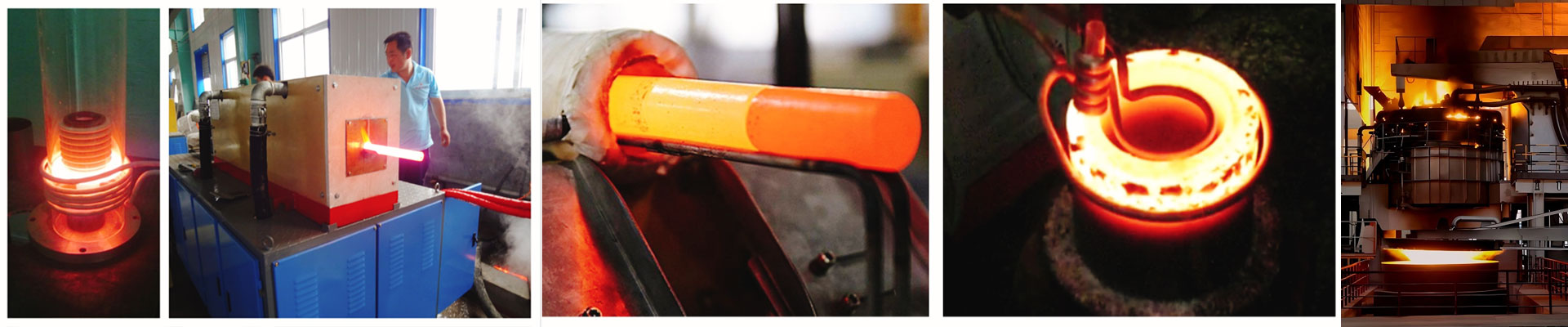
The EAF has always been the more agile cousin of the blast furnace-converter route — faster to build, quicker to change product mix, and, increasingly, the lower-carbon option. But "EAF steelmaking" in 2025 doesn't look like it did in 2000. Combined blowing, continuous charging, high-impedance designs, and the push toward "green steel" are reshaping what an EAF melt shop looks like. This article covers the technologies that are defining the next decade.
I. Combined Blowing: Stirring From Every Angle
1.1 What Combined Blowing Actually Means
"Combined blowing" in an EAF context means injecting gases — oxygen, inert gas, natural gas — into the molten bath from multiple locations: through the furnace bottom, through wall-mounted lances, and sometimes from above. The objective is to give the bath the kind of vigorous, uniform stirring that a converter gets from bottom blowing, but adapted to the EAF's particular operating cycle.
The concept borrows from the BOF experience, where bottom stirring is standard. In an EAF, the bath sits relatively still compared to a converter — the arc heats from above, but without mechanical stirring, temperature and composition gradients persist. Combined blowing fixes that.
1.2 The Main Configurations
Bottom Gas Injection
Permeable elements (usually slot-type or capillary-type permeable bricks) are installed in the furnace bottom, typically around the EBT tap hole where molten steel is retained after tap. The gases:
- Argon (or nitrogen) — mainly during the refining period; stirs the bath, promotes inclusion flotation, homogenizes temperature and chemistry
- Oxygen — small amounts during mid-to-late melting to promote decarburization and supplement heating
- Natural gas — as an auxiliary heat source and stirring gas
Gas flow rates are typically in the range of 0.5–3.0 Nm³/(min·t).
Multi-Lance Wall Blowing
Multiple oxygen lances at different elevations on the furnace wall:
- Lower lance: deep oxygen injection for decarburization
- Middle lance: auxiliary oxygen supply and post-combustion support
- Upper lance/burner: melt assist and heating of the wall zone
Top-Bottom Combined
Electrode heating from above + bottom gas stirring is the core combined-blowing concept. You get the flexibility of arc heating and the metallurgical benefits of bottom stirring in the same heat.
1.3 What You Gain
Shops that have implemented combined blowing report:
Metric Typical Improvement
Tap-to-tap time 5–15 min shorter
Power consumption 20–50 kWh/t reduction
Electrode consumption 0.2–0.5 kg/t reduction
Oxygen consumption 5–15 Nm³/t increase
[N] in molten steel 10–30 ppm reduction
Inclusion rating 0.5–1.0 grade improvement
The trade-off is real: you're spending more on oxygen and on the bottom stirring system. But between shorter heat times, lower power consumption, and better steel quality, the payback is typically 1–2 years. If you're making higher-value steels, the quality improvement alone can justify the investment.
II. Implementing Combined Blowing: What Actually Works
2.1 The EBT Bottom-Blowing Solution
On an EBT furnace, the usual practice is to install 1–3 permeable elements around the tap hole area. The reasoning is practical: after tap, you retain a "heel" of molten steel above the tap hole, and that heel provides a molten bath for the bottom gas to bubble through even when the furnace is partially empty.
The permeable element type matters. Slot-type elements are robust and give good gas distribution. Capillary-type elements give finer bubble size, which means better stirring efficiency, but they're more sensitive to slag penetration if you don't maintain them properly.
2.2 The Wall Lance + Bottom Blowing Combination
This is the most common combined-blowing configuration on new furnaces:
- 2–4 coherent jet oxygen lances on the wall for main decarburization
- 1–2 post-combustion lances on the wall to recover chemical energy
- 1–2 permeable elements in the bottom for argon stirring during refining
- Computer-coordinated flow control across all gas circuits
The coordination is the hard part. You need the bottom stir, the wall oxygen, and the post-combustion oxygen all working together — not fighting each other. That's where the control system matters.
2.3 Does It Pay Off?
Yes — usually within 1–2 years on a typical shop. The equation:
- Savings: shorter heat times (more tons per day), lower power consumption, lower electrode consumption, better yield
- Costs: additional CAPEX for bottom stirring and multi-lance systems, additional oxygen and gas consumption, maintenance of bottom permeable elements
- Quality premium: if you're making grades where inclusion control matters (bearing steel, for example), the quality improvement has direct market value
III. The Environmentally Friendly EAF
3.1 Designing for Emissions Control
An EAF is a point source of fumes, dust, and noise. Modern environmentally friendly designs don't treat emissions control as an afterthought — it's built in from day one.
Full Enclosure Hood
A fully enclosed hood structure above the entire EAF platform captures fumes at the source. Design targets:
- Enclosure leakage rate below 10%
- Access doors and operating windows equipped with air curtains or rapid roll-up doors
- Fume capture rate above 95%
The Fourth-Hole System
The most efficient fume capture method: a dedicated extraction port ("fourth hole") in the furnace roof that pulls high-temperature gas directly from inside the furnace. The numbers:
- Gas temperature: 800–1,200°C at the extraction point
- Dust concentration: 10–30 g/Nm³
- Requires a gas cooling system (air or water) before the dust collector
- Typically handles 30%–50% of total fume extraction volume, with the enclosure hood handling the rest
Roof Hood + Enclosure Hood
A dual-layer approach: the enclosure hood captures most of the fume, and a roof-level hood catches any fugitive emissions that escape the enclosure. It's a belt-and-suspenders approach, and for shops with strict emissions limits, it's becoming standard.
3.2 The High-Efficiency Side of "Green"
An EAF that's environmentally compliant but energy-inefficient is a false economy — the environmental equipment itself consumes substantial power. The efficient EAF integrates:
- UHP power supply — shortens heat time, which means less time making fumes
- Foam slag practice — improves thermal efficiency, which means less total energy input
- Coherent jet lances — better oxygen utilization, less waste
- Continuous charging (Consteel or similar) — preheats scrap, recovers energy from off-gas
- Intelligent control — optimizes the entire operation
3.3 Noise Control
An EAF is loud — the arc itself is a broadband noise source, and the gas evolution in the bath adds to it. Noise control measures:
- Foam slag — the single most effective measure; 10–15 dB reduction
- Full enclosure — the hood structure blocks noise propagation to the wider shop
- Low-noise equipment selection — fans, pumps, hydraulic power units
A well-designed modern EAF shop can keep the noise level below 85 dB at the operator positions, which meets occupational health standards in most jurisdictions.
IV. Continuous Charging: The Consteel and Beyond
4.1 The Consteel Process
Developed by Terni (Italy) in the 1980s, Consteel is the best-known continuous charging EAF process. The concept: instead of batch charging (power off → lift roof → charge → lower roof → power on), you feed scrap continuously through a side chute while the furnace is running.
How It Works
- Scrap is conveyed on a continuous belt feeder and enters the furnace through a side port
- The furnace retains a molten heel after tap (EBT design)
- The arc keeps burning during charging — no power-off periods
- Scrap is preheated by the furnace off-gas before it enters the furnace; preheat temperature can reach 400–600°C
What You Gain
- Energy efficiency: scrap preheat saves 50–80 kWh/t
- Short cycle: continuous operation can push tap-to-tap to 40–50 minutes
- Grid friendliness: no large current interruptions from batch charging; smoother electrical load
- Environmental performance: continuous, controlled off-gas flow, easier to treat
- Automation level: less manual intervention
What You Need
- Consistent scrap supply with relatively uniform sizing (conveyor systems don't handle widely variable scrap well)
- Sufficient shop length for the scrap pre-treatment and conveyor system
- Higher CAPEX than a batch-charging furnace
4.2 Other Continuous Charging Approaches
Twin-Shell Furnace
Two furnace bodies share one transformer and electrical system. While one body is melting, the other is tapping and being recharged. It's not truly continuous, but it approximates continuous production and can substantially increase throughput without a second transformer.
Shaft Furnace
A shaft sits on top of the furnace roof. Scrap is loaded into the shaft and preheated by off-gas before being dropped into the furnace. The Fuchs shaft furnace uses "fingers" — reciprocating support members in the shaft — to control the scrap drop rate.
V. High-Impedance EAF Technology
5.1 Why High Impedance?
In a conventional AC EAF, the arc has a negative resistance characteristic — as current increases, arc voltage drops. This makes the arc inherently unstable: small disturbances can cause the arc to extinguish and re-strike repeatedly.
The high-impedance solution: add series reactance (typically via a reactor connected in series with the transformer secondary) to steepen the voltage-current characteristic. A steeper characteristic means that when arc current fluctuates, the voltage change is larger, which provides natural damping and stabilizes the arc.
5.2 The Trade-Offs
Advantages
- Arc stability: less arc flicker, fewer re-ignitions
- Lower electrode consumption: stable arcs mean less thermal cycling on the electrode surface; 10%–20% reduction vs. conventional designs
- Improved harmonic characteristics: some harmonic suppression benefit
Disadvantage
- Lower power factor: the series reactor reduces PF, which means you need a larger SVC or STATCOM to compensate. This is the main economic drawback of high-impedance designs.
5.3 High-Impedance + UHP
The combination that's become standard for large AC furnaces: a high-impedance circuit paired with ultra-high-power transformer ratings. You get the production rate of UHP with the arc stability of high impedance. It's a good match — the high power density makes arc stability even more important, and the high-impedance design delivers that.
VI. The EAF "Short Route" and Why It Matters
6.1 What "Short Route" Means
Steelmaking routes divide into two families:
- Long route (BF-BOF): iron ore → sintering → coking → blast furnace → BOF → continuous casting → rolling
- Short route (EAF-based): scrap → EAF → secondary refining → continuous casting → rolling
The EAF route eliminates the entire ironmaking chain. That's a massive simplification.
6.2 The Environmental Case
The numbers are compelling:
Carbon Emissions
- Long route: ~2.0–2.5 tons CO₂ per ton of crude steel
- EAF route: ~0.4–0.8 tons CO₂ per ton (depending on the power grid mix)
That's a 60%–70% reduction. If the power comes from renewable sources, the EAF number drops further — "green steel" made with wind or solar power is a real, available product today.
Air Pollutants
- Dust: ~80% reduction vs. BF-BOF
- SO₂: ~90% reduction (mostly from power generation; near-zero if the power is from non-combustion sources)
- NOx: ~80% reduction
Solid Waste
The BF-BOF route generates blast furnace slag, BOF slag, and substantial dust collector waste. The EAF route generates EAF slag and dust — substantially less total solid waste.
6.3 The Economic Case
- Lower CAPEX: no ironmaking system; total investment is roughly 1/3–1/2 of a BF-BOF route of equivalent capacity
- Shorter construction time: 12–18 months from groundbreaking to first heat, vs. 3–5 years for a BF-BOF greenfield
- Production flexibility: EAFs can switch product grades relatively quickly; well-suited to multi-grade, variable-order book situations
- Higher labor productivity: tons per employee is typically higher than in integrated mills
6.4 Where the Bottlenecks Are
The EAF route isn't without constraints, particularly in China's context:
- Scrap availability: societal steel stock is still accumulating; scrap supply is tightening as EAF capacity expands
- Power cost: industrial electricity prices affect the EAF cost position relative to the BF-BOF route
- Scrap quality: residual elements (Cu, Sn, Ni, etc.) in scrap limit the ability to make certain high-grade steels; scrap pre-treatment helps but adds cost
- Power grid mix: in regions where grid power is coal-dominated, the CO₂ advantage of EAFs is partially offset
These constraints are easing as scrap accumulation continues, the power grid cleans up, and scrap pre-treatment capacity expands. The medium-to-long-term direction is clear.
VII. What the Next Decade Looks Like
7.1 Green and Low-Carbon
Cleaner Power
As the grid mix shifts toward renewables, the embedded carbon in EAF steel drops. "Zero-carbon steel" — made with wind, solar, or nuclear power — is already being produced in pilot quantities. It commands a price premium in markets where carbon is priced or where customers have decarbonization commitments.
Hydrogen
Hydrogen is attracting serious R&D attention in several roles:
- Hydrogen-oxygen combustion for melt assist — the product is water; zero CO₂
- Hydrogen as bottom-stirring gas — part of the hydrogen dissolves in the bath, but most can be removed in subsequent vacuum treatment
- Hydrogen plasma — extremely high enthalpy; still at the research stage but with long-term potential
Carbon Capture
For emissions that can't be eliminated, carbon capture from the EAF off-gas is technically feasible. The high CO₂ concentration in post-combustion off-gas makes it a relatively favorable capture application compared to dilute sources.
7.2 Higher Efficiency
- Higher power density: transformer ratings continue to climb; the target is tap-to-tap in under 30 minutes for medium-sized furnaces
- Continuous production: Consteel, shaft furnaces, and twin-shell designs continue to gain market share
- Full energy recovery: waste heat from off-gas, from slag, and from cooling water is increasingly recovered for plant use or even exported to nearby facilities
7.3 Smarter Control
- Full-process intelligent control: from scrap bucket sequencing through power supply, oxygen supply, and tap — the entire heat optimized by model
- Quality prediction: end-point temperature and composition predicted by AI models, reducing the number of re-heats and off-spec taps
- Equipment health management: sensor-based condition monitoring and predictive maintenance — fix it before it fails, not after
- Digital twin: virtual-real integration for optimization and training
7.4 Higher-End Products
EAF steelmaking is moving up the value chain. Historically associated with long products and commodity grades, EAFs are increasingly making:
- High-end automotive steels (bearing steel, gear steel)
- Tool steels (die steel, high-speed steel)
- Energy sector steels (nuclear, wind power)
- Aerospace alloys (ultra-high-strength steels and superalloys)
This requires tight composition control, low inclusion levels, and consistent mechanical properties — all achievable with modern EAF practices, but requiring disciplined process control.
Summary
EAF steelmaking is at an inflection point. The technology that defined the industry in the 1990s and 2000s — basic UHP furnaces with batch charging — is being superseded by systems that integrate combined blowing, continuous charging, intelligent control, and comprehensive emissions management.
The strategic context matters as much as the technology. With global pressure on carbon emissions, the EAF short route has a structural advantage that wasn't there a decade ago. For steelmakers, the question isn't whether EAFs will play a larger role — it's how quickly to adopt the next generation of EAF technology and where to position in an increasingly quality-conscious and carbon-conscious market.
