
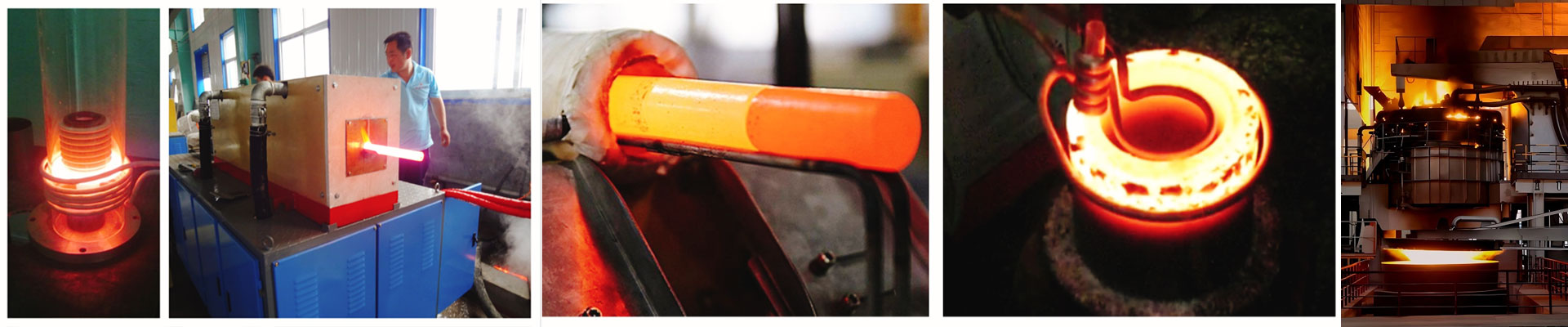
In the mid-1960s, a group of engineers at Union Carbide asked a simple question: what happens if we just keep turning up the power? The answer changed the economics of electric steelmaking. Before UHP (Ultra-High Power), an EAF heat could easily take three to four hours. After it, 40- to 60-minute heats became achievable. The productivity multiplier was genuine—and the industry noticed.
The Problem UHP Was Designed to Solve
Why Traditional EAFs Were Slow
Go back to the 1950s and an EAF shop was a different animal. Transformer power levels sat at 200 to 300 kVA per ton of furnace capacity. That's modest by any standard. A heat took three, sometimes four hours. For a mill trying to compete with the blast-furnace–BOF route on volume, that simply wasn't fast enough.
The bottleneck was power input. You could load the scrap, you could blow oxygen, but if your transformer couldn't deliver the megawatts, your melt rate had a hard ceiling. The market for EAF steel was growing—scrap was becoming more available, mini-mills were emerging as a concept—but the technology needed a step-change.
The UHP Insight
W.E. Schwabe and his colleagues at Union Carbide framed the idea in the late 1960s:曲轴 increase the transformer power level dramatically, and pair that with a set of supporting technologies to handle the consequences. The promise was specific—multiply the production rate of an EAF without a proportional increase in capital cost.
It worked. UHP didn't just improve EAFs; it made them a credible alternative to integrated mills for high-volume carbon steel production. Nucor's rise in the United States was built on exactly this insight.
What "Ultra-High Power" Actually Means
The Power Level Definition
The metric that matters is specific power—transformer rated capacity divided by furnace rated capacity, expressed as kVA per ton. The industry has settled into three bands:
Designation Power Level (kVA/t) Context
RP (Regular Power) 200–400 Legacy equipment, mostly replaced
HP (High Power) 400–600 Mid-tier, some still operating
UHP (Ultra-High Power) 600–1000+ Modern standard
The leading edge of the market now pushes 1000 to 1200 kVA/t for the most aggressive shops. At those levels, the arc is delivering tremendous energy density—and that's exactly the point.
What Happens When You Crank Up the Power
The headline benefit is obvious: the melting rate climbs and the heat time collapses. Traditional RP furnaces run 180 to 240 minutes per heat. A modern UHP furnace targets 40 to 60 minutes. The record holders—some specialty steel shops with optimized practices—have demoed heats in the 27-minute range.
Think about what that does to annual output. A 100-ton UHP furnace can produce 800,000 to 1,000,000 tons per year. A 100-ton RP furnace from the 1960s? Maybe a quarter of that. The step-change in productivity is why UHP is now the default choice for any new EAF project.
The Engineering Challenges UHP Created
Crank up the power and you create a new set of problems. The industry has spent the last fifty years solving them.
The Lining Erosion Problem
More power means a more aggressive arc. The thermal load on the furnace walls—especially the "hot spot" zone directly under the electrodes—goes up dramatically. If you do nothing, your refractory life craters and your furnace availability tanks.
The solution came in two parts.
Water-cooled furnace walls. Replace the refractory bricks in the upper wall zone with water-cooled copper plates or steel panels. The hot face forms a protective slag coating (slag skin) that actually insulates the cooling system. The refractory consumption in modern UHP furnaces has dropped to 3 to 5 kg per ton of steel. That's a fraction of what it used to be.
Foamy slag. If you can make the slag foam to a depth of 300 to 500 mm, the arc buries itself in the foam. The radiation that would have roasted the walls gets absorbed by the slag and transferred to the bath. It's an elegant solution—the slag protects the walls and improves your thermal efficiency at the same time.
Electrode Consumption
Higher current density means more electrode oxidation and more end consumption from sublimation. Electrodes aren't cheap—they're a meaningful line item in your operating cost.
The industry responded with UHP-grade electrodes—higher density, higher strength, better oxidation resistance than standard graphite electrodes. Electrode coating (anti-oxidation coating sprayed onto the electrode surface) helps. So does careful joint design and tightening—a loose joint is an oxidation hotspot. And, increasingly, mills are looking at reducing electrode consumption by optimizing the power profile: run high power to melt fast, but don't overshoot what the bath can absorb.
Power Quality and the Grid
A UHP furnace is a hostile load for a utility. Voltage flicker, harmonic distortion, reactive power swings—utilities notice, and they charge for it.
The fixes are well-established now:
- SVC (Static Var Compensator) or STATCOM systems to correct reactive power and suppress flicker
- Active harmonic filters to clean up the distortion
- Series reactors on the high-voltage side to limit fault current
None of this is cheap, but it's become a standard part of the EAF electrical system. If you're planning a new UHP furnace, the utility interface cost needs to be in your budget from day one.
The Short Network Challenge
The short network—the conductive loop from the transformer secondary to the electrodes—carries tens of thousands of amps in a UHP furnace. Every milliohm of resistance is lost energy. Every millihenry of reactance is reduced power factor.
The design evolution has been incremental but important:
- Copper-tube water-cooled busbars to minimize resistance
- Optimized spatial arrangement of the phases to cancel reactance where possible
- Conductive arms (the electrode arm itself carries current, eliminating separate copper tubing) to shorten the current path
- Minimized short network length to reduce impedance
It's not glamorous engineering, but it matters. A well-designed short network can improve your power utilization by several percentage points. Over a year, that's real money.
The Supporting Technologies That Make UHP Work
A UHP furnace doesn't run on power alone. It needs a suite of technologies to handle the consequences of that power level.
Water-Cooled Walls and Roof
We touched on this already, but it's worth expanding. In a modern UHP furnace, 80 to 90 percent of the furnace wall area above the slag line is water-cooled. The remaining areas—typically the bottom wall course and the hearth—still use refractory brick. The water-cooled panels form a slag skin that's self-maintaining. As long as you have slag on the walls, the panels are protected. Lose the slag coverage and you can damage a panel quickly.
The roof gets similar treatment. Water-cooled roof panels are standard. The electrode openings and the roof center (where the delta section sits) are the high-wear zones.
Foamy Slag: More Than Just Wall Protection
Foamy slag deserves its own discussion because it's central to UHP operation. The mechanism is straightforward: inject oxygen and carbon into the slag layer, the C–O reaction generates CO bubbles, and the slag foams. A well-foamed slag layer of 300 to 500 mm does several things at once:
- Shields the walls and roof from direct arc radiation
- Improves thermal efficiency by 10 to 15 percent—the arc heat gets transferred through the slag to the bath instead of radiating to the furnace structure
- Reduces noise (arc noise is damped by the slag foam)
- Stabilizes the arc, reducing flicker
The skill in foamy slag practice is maintaining it consistently. Too little foam and you're not protected. Too much and slag carries over into the tap. Modern shops use automated oxygen and carbon injection with slag height sensing to keep the foam in the right range.
Oxy-Fuel Assist
UHP furnaces almost always run oxy-fuel burners in the furnace walls. Natural gas (or pulverized coal) mixed with oxygen creates a flame that heats the scrap in the periphery—the areas the arc doesn't reach directly. This does two useful things: it supplements the energy input (reducing electricity consumption) and it prevents cold spots where scrap welds itself to the wall and refuses to melt.
A typical UHP furnace might have four to six oxy-fuel burners. The fuel consumption is modest, and the payoff in reduced tap-to-tap time is genuine.
Eccentric Bottom Tapping (EBT)
EBT is now standard on UHP furnaces, and for good reason. The tap hole is set eccentrically in the furnace bottom. To tap, you tilt the furnace only about 15 to 20 degrees (compared with 40 to 45 degrees for a traditional spout tap). The steel flows out the bottom tap hole while most of the slag stays in the furnace.
The benefits are multiple:
- Slag-free tapping (or close to it)—critical for downstream refining
- Retains molten steel and slag in the furnace for the next heat, reducing the thermal cycle
- Lower mechanical stress on the furnace structure
- Faster tapping
Once you've run an EBT furnace, going back to a spout tap feels like a step backward.
Electrode Regulation: Keeping the Arc Stable
A UHP furnace needs an electrode regulation system that can keep up. The arc in a high-power furnace is dynamic—scrap movement, bath level changes, and slag condition all shift the arc length constantly. If the regulation system is slow, you get arc instability, poor power transfer, and electrode waste.
Modern systems use hydraulic servo drives (fast response), constant-power or constant-current control strategies, and multi-variable algorithms that account for current, voltage, and power factor simultaneously. Response times in the millisecond range are the target. Some of the newest systems use AI-based optimization to learn the optimal power profile for a given furnace condition.
The Trend Toward Larger Furnaces
Why Bigger Keeps Winning
UHP technology made larger furnaces economically attractive. When your power level is high, the fixed costs of the electrical system, the building, and the support equipment get spread over more tons per hour. The scale effect is real.
There are other drivers too. A large furnace matches well with a continuous caster—the modern steelmaking line wants steady, volume production. A large furnace also has lower heat loss per ton (surface-area-to-volume ratios favor size). And the labor requirement for a 150-ton furnace isn't that different from a 50-ton furnace, so productivity per operator goes up.
How Furnace Sizes Have Evolved
Era Typical Furnace Size Context
1950s 5–30 tons Small shop era
1960s 30–80 tons Beginning of scaling
1970s 60–150 tons UHP enables large furnaces
1980s–90s 80–200 tons Large-scale maturity
2000s–present 100–250 tons 120–180 tons is the sweet spot
The record for the largest operating EAF is around 400 tons (Osaka Steel, Japan), but most engineers will tell you that 150 to 180 tons is the economically optimal range. Beyond that, the equipment gets unwieldy and the process control gets harder.
The Economics: Does UHP Actually Save Money?
Productivity Gains
This is where UHP earns its keep. Heat time drops from 3–4 hours to 40–60 minutes. Annual output per furnace multiplies by 2× to 4×. Labor productivity follows the same curve.
Energy and Consumption Metrics
A modern UHP furnace targets these numbers:
Metric Typical Range Advanced Shops
Power consumption 300–450 kWh/t 280–350 kWh/t
Electrode consumption 1.0–2.5 kg/t <1.0 kg/t (with DC)
Oxygen consumption 25–40 Nm³/t 20–30 Nm³/t
Refractory consumption 3–5 kg/t <3 kg/t
The Bottom Line on Cost
UHP equipment costs 20 to 30 percent more than RP equipment of the same capacity. But the unit production cost is typically 10 to 20 percent lower because the fixed costs get spread over many more tons. The payback period on the UHP premium is often just a few years. After that, it's pure upside.
UHP technology is the reason electric steelmaking can compete with integrated mills on volume. It's also the platform on which every other modern EAF technology—foamy slag, continuous charging, intelligent control—gets built. The concept is fifty years old, but it's still the single most important equipment decision in any new EAF project.
