
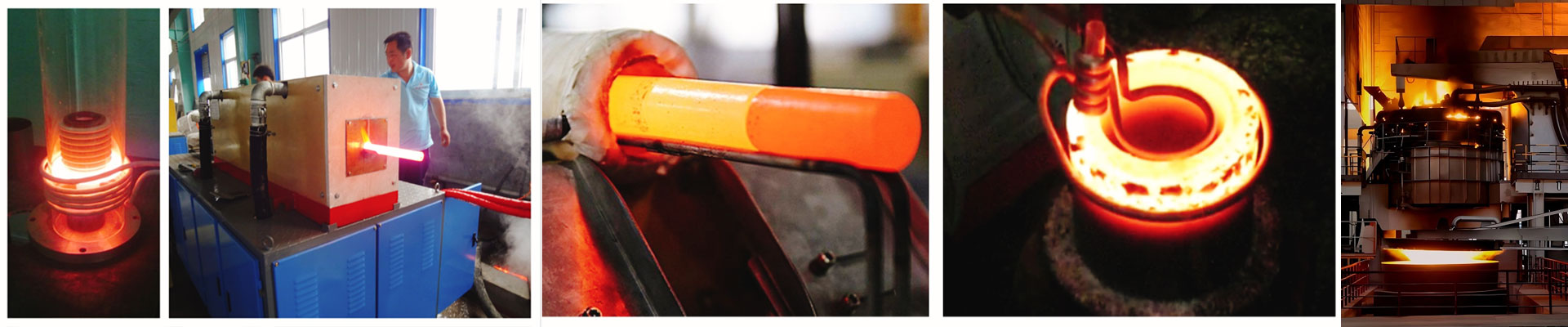
Gas Furnace Industry Case Studies: From Steel Mills to Forging Shops
Over the last 20 years, MONTE INTELLIGENCE has supplied gas-fired furnace designs to a wide range of industries: steel mills, forging shops, foundries, pressure vessel fabricators, automotive parts manufacturers, and many more. Each industry has its own process requirements, throughput targets, and operating practices. Let me walk through a few representative case studies that illustrate the diversity of the applications and the design decisions that shaped each installation.
Case Study 1: Steel Mill Reheating Furnace
A steel mill in Southeast Asia was producing 500,000 tons of hot-rolled steel per year, with a 100-ton-per-hour continuous caster feeding a hot-strip mill. The existing pusher-type reheating furnace was 30 years old, with cold-air burners and a fuel efficiency of 35 percent. The mill wanted to upgrade to a modern walking beam furnace with regenerative burners and a fuel efficiency of 60 percent.
MONTE INTELLIGENCE supplied a 100 ton-per-hour walking beam furnace with 8 regenerative burners on each side (16 total), 4 heating zones, and a PLC-based control system. The furnace heats 200 to 250 mm thick slabs from ambient to 1250 degrees Celsius in 60 to 75 minutes, with a fuel consumption of 1.2 GJ per ton.
The fuel efficiency improvement from 35 percent to 60 percent saves the mill 8 to 10 million USD per year in gas cost. The CO2 emissions drop by 200,000 to 250,000 tons per year. The furnace was commissioned in 2022 and has been running at nameplate throughput for 18 months with an availability above 98 percent.
Case Study 2: Forging Shop Bogie Hearth Furnace
A forging shop in Texas was producing 50,000 tons of forged components per year, with loads ranging from 10 to 100 tons. The existing bogie hearth furnace was 25 years old and was struggling to meet the temperature uniformity requirements for the aerospace customers. The shop needed a new furnace with plus or minus 5 degrees Celsius uniformity across the entire workload.
MONTE INTELLIGENCE supplied a 150-ton capacity bogie hearth furnace with 6 zones of control, high-velocity recuperative burners, and a ceramic fiber module lining. The furnace handles loads up to 6 m wide x 5 m high x 12 m long, with a maximum operating temperature of 950 degrees Celsius.
The temperature uniformity was verified at plus or minus 5 degrees Celsius at operating temperature, with the worst-case variation across the full workload. The furnace was commissioned in 2023 and has been approved by three major aerospace customers for heat treatment of forging pre-machined components.
Case Study 3: Foundry Annealing Furnace
A foundry in India was producing 30,000 tons of ductile iron castings per year, with a mix of small (50 kg) and large (5 ton) castings. The existing batch annealing furnace was a top-hat design with cold-air burners and a cycle time of 30 to 36 hours per load. The foundry wanted to cut the cycle time and reduce the fuel cost.
MONTE INTELLIGENCE supplied a car-bottom furnace with 100-ton capacity, high-velocity recuperative burners, and a multi-zone control system. The furnace heats castings to 920 degrees Celsius for full annealing, with a cycle time of 18 to 24 hours per load.
The fuel efficiency improvement from 30 percent to 50 percent saves the foundry 1.5 million USD per year in gas cost. The cycle time reduction from 30 hours to 22 hours increases the throughput by 30 to 40 percent. The furnace was commissioned in 2024 and has been running at nameplate capacity for 12 months.
Case Study 4: Pressure Vessel Stress Relieving
A pressure vessel fabricator in South Korea was producing 100 to 150 large pressure vessels per year, with diameters up to 6 m and weights up to 300 tons. The existing bogie hearth furnace was limited to 200-ton loads, and the fabricator needed a larger furnace to handle the growing vessel sizes for the LNG market.
MONTE INTELLIGENCE supplied a 400-ton capacity bogie hearth furnace with 8 zones of control, low-NOx burners, and a ceramic fiber module lining. The furnace handles loads up to 7 m wide x 7 m high x 25 m long, with a maximum operating temperature of 950 degrees Celsius.
The furnace is the largest bogie hearth in South Korea and one of the largest in Asia. The low-NOx burners keep the NOx emissions below 50 mg per Nm3, well within the strict local standards. The temperature uniformity was verified at plus or minus 8 degrees Celsius at operating temperature. The furnace was commissioned in 2025 and is currently in the ramp-up phase.
Case Study 5: Continuous Annealing Line for Steel Strip
A steel processor in the Middle East was producing 200,000 tons of cold-rolled steel strip per year, with strip widths up to 1500 mm and thicknesses from 0.3 to 2.0 mm. The existing continuous annealing line was 20 years old and was struggling to meet the surface finish requirements for the automotive customers.
MONTE INTELLIGENCE supplied a continuous annealing line with a horizontal furnace, gas-fired radiant tubes, and a hydrogen-nitrogen protective atmosphere. The furnace heats the strip to 750 to 850 degrees Celsius, with a strip speed of 30 to 100 m per minute. The atmosphere consumption is 50 to 100 cubic meters per hour.
The new line produces a bright, oxide-free surface that meets the automotive specifications. The fuel efficiency is 55 to 60 percent, which is among the highest in the industry for this type of line. The line was commissioned in 2023 and has been running at nameplate capacity for 18 months.
Common Themes
Looking across these case studies, several common themes emerge:
First, the fuel efficiency of older gas furnace designs is typically 30 to 40 percent, and modern designs achieve 50 to 65 percent. The efficiency gap represents a 30 to 50 percent fuel cost reduction that pays back the new furnace capital cost in 2 to 5 years.
Second, the temperature uniformity of older designs is typically plus or minus 15 to 20 degrees Celsius, and modern designs achieve plus or minus 5 to 10 degrees Celsius. The uniformity improvement opens new customer opportunities and reduces the reject rate on existing products.
Third, the control system on older designs is typically analog or first-generation digital, and modern designs use PLC-based control with full data logging and remote monitoring. The control system improvement enables process certification to international standards (AMS 2750, CQI-9, ISO 9001) and provides the traceability that aerospace and automotive customers require.
Fourth, the burner technology on older designs is typically cold-air atmospheric or low-velocity, and modern designs use high-velocity recuperative or regenerative burners. The burner upgrade alone can deliver 20 to 50 percent fuel savings with a 12 to 24 month payback.
Talk to MONTE INTELLIGENCE About Your Application
For buyers considering a gas-fired furnace for a specific industry application, MONTE INTELLIGENCE engineering can review the case studies and recommend a configuration that matches the process, the throughput, and the available gas supply. Visit www.cnlymonte.com/products-gas-furnace.html for product specifications and additional case studies. For a project discussion, email helenxu@cnlymonte.com with subject line gas furnace case study and details on your industry, process recipe, and throughput target.
