
2024-01-10
More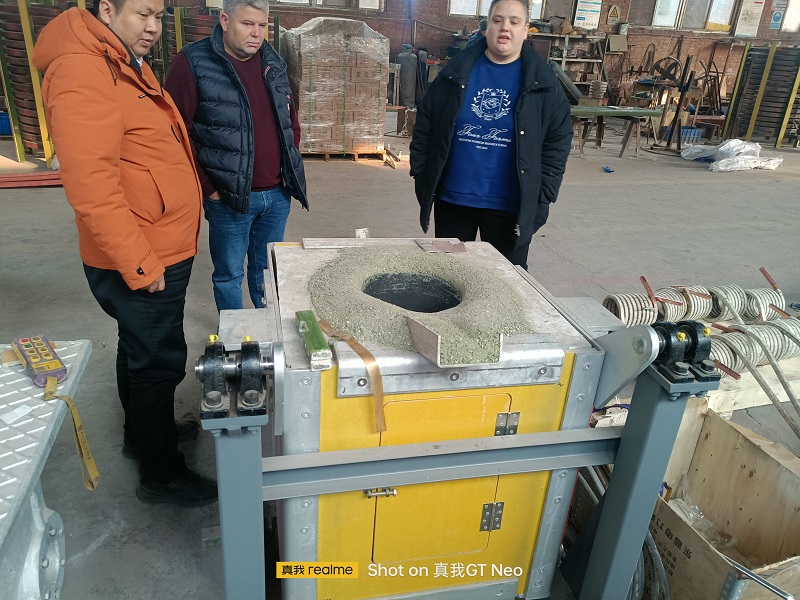

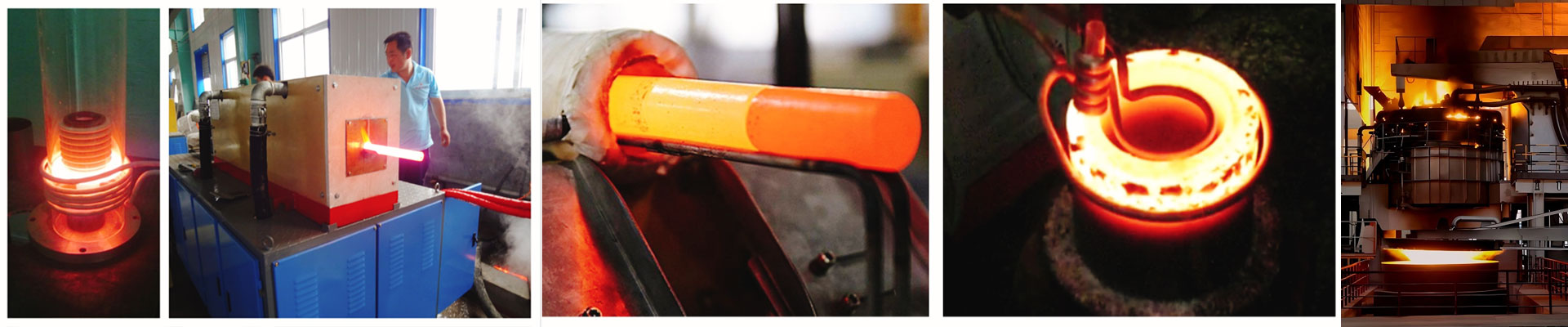
A medium frequency induction melting furnace delivers high thermal efficiency, precise temperature control, and rapid melting for ferrous and non-ferrous metals. MONTE INTELLIGENCE engineers medium frequency induction melting furnaces for foundries, steel mills, and metal recycling operations worldwide. Growing global demand for energy-efficient production drives medium frequency induction melting furnace adoption across Africa, Middle East, and Southeast Asia.
[Image 1: 1-ton medium frequency induction melting furnace — hydraulic tilting, IGBT power supply. Alt: MONTE INTELLIGENCE industrial induction melting furnace]
A medium frequency induction melting furnace operates through electromagnetic induction. Alternating current passing through a water-cooled copper coil generates a powerful magnetic field inside the furnace crucible. The magnetic field induces eddy currents within charged metal materials, producing rapid and uniform heating through Joule effect resistance. Unlike fuel-fired furnaces, medium frequency induction melting generates heat directly inside the metal charge rather than transferring heat through a refractory wall from an external flame source.
Medium frequency induction melting furnaces typically operate in the 150-10,000 Hz frequency range. Lower frequencies deliver deeper electromagnetic penetration for large-capacity melting. Higher frequencies suit smaller batches and precious metal melting where surface heating precision matters most. MONTE INTELLIGENCE configures frequency parameters based on specific metal types and crucible dimensions for each customer application.
The medium frequency furnace power supply converts standard 50/60 Hz electricity to medium frequency output through IGBT inverter technology. Modern IGBT-based medium frequency induction melting furnaces achieve conversion efficiency exceeding 96%, substantially reducing operating costs per ton of molten metal produced. Advanced digital DSP control enables precise power ramp-up and automatic frequency tracking for optimal energy transfer.
Steel foundries use medium frequency induction melting furnaces for carbon steel, alloy steel, and stainless steel castings with precise composition control. Scrap recyclers deploy medium frequency induction melting furnaces to convert shredded steel, cast iron, and non-ferrous metals into reusable ingots. Aluminum and copper manufacturers rely on medium frequency induction melting furnaces for rapid melting with minimal gas absorption and dross formation.
Precious metal refiners select medium frequency induction melting furnaces for gold, silver, and platinum group metal processing where melt cleanliness and minimal material loss prove critical. The electromagnetic stirring inherent to induction melting ensures homogeneous alloy composition without manual intervention. Automated temperature monitoring maintains pouring temperature within ±5°C tolerance for precision casting applications.
Induction heating equipment extends beyond melting to industrial heat treatment and forging. Induction heating equipment performs surface hardening, through-hardening, and tempering of gears, shafts, bearings, and automotive components. Induction heating equipment supports hot forging by heating billets to precise forging temperatures within seconds, achieving cycle times far faster than gas-fired furnace alternatives. Explore MONTE INTELLIGENCE induction heating equipment for detailed specifications.
[Image 2: Induction heating equipment — billet heating with automated feed. Alt: MONTE INTELLIGENCE induction billet heater]
Medium frequency induction melting furnaces deliver measurable advantages compared to cupola furnaces, electric arc furnaces, and gas-fired crucible furnaces. Energy consumption ranges 550-650 kWh per ton of steel melted — approximately 30% less than electric arc furnace consumption of 800-900 kWh per ton. Lower energy input translates to reduced operating costs and smaller carbon footprint per ton of finished metal.
Melting speed represents another significant medium frequency induction melting furnace advantage. A 1-ton medium frequency furnace completes a full melt cycle in 45-60 minutes, while equivalent fuel-fired furnaces require 2-3 hours. The faster melting cycle increases daily throughput by 50-100% depending on metal type and charge material density. Medium frequency furnace operations achieve metal oxidation loss of only 1-2% compared to 5-8% in traditional cupola melting.
Environmental compliance distinguishes medium frequency induction melting furnaces from fossil fuel alternatives. Induction melting generates zero combustion emissions, eliminating SOx, NOx, and particulate matter. The enclosed crucible design captures fumes for efficient baghouse filtration. Lower ambient noise and reduced radiant heat improve operator working conditions compared to open-flame furnace environments.
MONTE INTELLIGENCE (Luoyang Monte Intelligent Technology Co., Ltd.) manufactures a comprehensive range of medium frequency induction melting furnaces spanning capacities from 50 kg laboratory units to 30-ton production systems, with power ratings from 35 kW to 15,000 kW. Standard configurations include fixed-body, hydraulic tilting, and steel-shell furnace designs with crucible options in silica, alumina, or magnesia refractory linings tailored to specific metal types.
MONTE INTELLIGENCE induction melting furnace systems feature IGBT-series resonant power supplies with digital DSP control, hydraulic tilting mechanisms, PLC touchscreen HMI control panels, and closed-loop water cooling with temperature and flow monitoring. Every MONTE INTELLIGENCE medium frequency furnace undergoes rigorous factory acceptance testing before shipment to ensure reliable commissioning at customer facilities worldwide.
View complete medium frequency furnace product specifications at MONTE INTELLIGENCE Melting Furnace Products. For induction heating equipment details, visit Induction Heating Machine Product Page. Contact the MONTE INTELLIGENCE engineering team for customized configurations matching specific production throughput and metal type requirements.
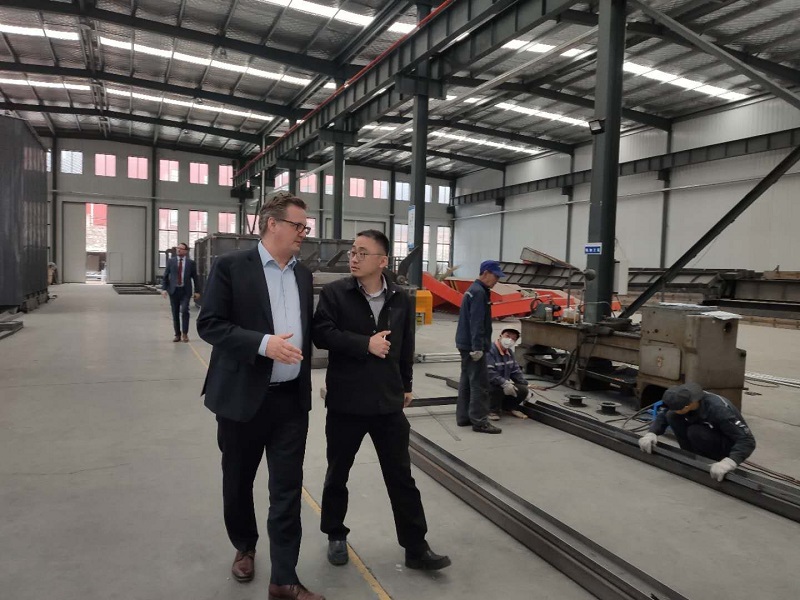
[Image 3: MONTE INTELLIGENCE factory — medium frequency furnace assembly and quality testing. Alt: MONTE INTELLIGENCE induction melting furnace factory]
Selecting the optimal medium frequency induction melting furnace requires evaluating key technical parameters. Melting capacity determines crucible size, power supply rating, and overall furnace dimensions. MONTE INTELLIGENCE technical engineers help match medium frequency furnace specifications to production targets, available floor space, and utility infrastructure constraints.
Metal type and melting temperature influence refractory lining selection and power configuration. Steel melting at 1,450-1,650°C requires silica or alumina-based crucibles. Aluminum melting at 700-750°C uses silicon carbide or graphite crucibles. Copper alloy melting at 1,050-1,200°C demands specialized refractories resistant to chemical attack. MONTE INTELLIGENCE recommends appropriate lining materials based on decades of process experience.
IGBT-based power supplies offer higher efficiency at partial loads, wider frequency adjustment, and simpler maintenance compared to older SCR technology. MONTE INTELLIGENCE recommends IGBT systems for most medium frequency furnace installations. Buyers should evaluate total system integration — including water cooling, fume extraction, charging systems, and PLC controls — rather than comparing individual component prices.
[Image 4: HMI control panel — real-time power, temperature, frequency monitoring. Alt: MONTE INTELLIGENCE medium frequency furnace PLC touchscreen]
MONTE INTELLIGENCE provides complete installation supervision, commissioning, and operator training for all medium frequency induction melting furnace deliveries. MONTE INTELLIGENCE field engineers oversee foundation preparation, equipment assembly, electrical connections, and water system installation at customer sites worldwide. Operator training programs cover normal operation, emergency procedures, refractory maintenance, and basic troubleshooting.
MONTE INTELLIGENCE supplies genuine spare parts, refractory materials, power semiconductors, and remote technical support for the full medium frequency furnace service life of 15-20 years. Medium frequency induction melting furnace technology continues advancing with SiC and GaN power semiconductors, AI-enhanced optimization, and larger single-unit capacities. MONTE INTELLIGENCE medium frequency furnaces deliver reliable performance for foundries and recyclers across Africa, Middle East, South Asia, and Southeast Asia.
Contact MONTE INTELLIGENCE Technical Sales Director Helen Xu for a proposal tailored to production requirements and site conditions:
Email: helenxu@cnlymonte.com
Website: www.cnlymonte.com
Response within 24-48 hours. Urgent inquiries: add "PRIORITY" to subject line.
Prepared by MONTE INTELLIGENCE engineering team led by Helen Xu, Technical Sales Director — 15+ years induction furnace design across 20+ countries.
A mesh belt furnace is a continuous heat treatment system designed for high-volume thermal processing of small to medium-sized components. The mesh belt conveyor furnace transports workpieces through precisely controlled heating zones on a continuous wire mesh belt, enabling uniform temperature exposure across every part in the production run. Unlike batch furnaces that process workpieces in discrete loads, a continuous mesh belt furnace delivers consistent throughput with reduced cycle times, making the mesh belt conveyor furnace a preferred choice for manufacturers requiring repeatable metallurgical results at production scale.
The defining advantage of a mesh belt conveyor furnace lies in continuous processing capability. Workpieces are loaded onto the moving mesh belt at the charge end and proceed through pre-heating, heating, soaking, and cooling zones without interruption. The continuous mesh belt furnace eliminates the thermal lag associated with batch loading and unloading. Every component passing through the industrial mesh belt furnace receives identical thermal exposure because belt speed, zone temperatures, and atmosphere conditions remain constant throughout the production cycle. The consistency achieved through continuous processing proves especially critical for heat treatment operations governed by strict metallurgical specifications such as AMS 2750 and CQI-9.
Industrial mesh belt furnaces support a comprehensive range of heat treatment processes across multiple manufacturing sectors. Annealing in a mesh belt furnace softens workpieces for subsequent machining operations while relieving internal stresses from prior cold working. Hardening through a conveyor belt furnace achieves the required martensitic transformation for wear-resistant components. Tempering after quenching restores toughness and reduces brittleness in hardened parts. Additional processes performed in continuous mesh belt furnaces include carburizing for case hardening, brazing for joining dissimilar metals, sintering for powder metallurgy components, and solution heat treatment for aluminum alloys. The mesh belt conveyor furnace platform demonstrates exceptional process versatility for manufacturers running multiple thermal treatment specifications on shared production assets.
Temperature uniformity stands as a critical performance metric for any mesh belt furnace deployed in demanding production environments. At MONTE INTELLIGENCE, each industrial mesh belt furnace incorporates multi-zone PID temperature control with strategically positioned heating elements above and below the conveyor belt. The mesh belt conveyor furnace achieves temperature uniformity of ±5°C across the belt width, verified through comprehensive TUS (Temperature Uniformity Survey) testing conducted according to AMS 2750 standards. Advanced ceramic fiber insulation and precisely engineered airflow management within the mesh belt furnace chamber minimize thermal gradients. Elimination of thermal gradients ensures consistent metallurgical results for every batch of components processed through the continuous heat treatment furnace.
Energy efficiency in modern mesh belt furnace design translates directly into lower operating costs for industrial manufacturers competing in global markets. MONTE INTELLIGENCE mesh belt conveyor furnaces feature high-density ceramic fiber lining that reduces heat loss through the furnace shell by up to 40% compared to conventional brick-lined designs. The continuous heat treatment furnace incorporates waste heat recovery through controlled exhaust management in the preheating zone, where exhaust gases preheat incoming workpieces before the gases exit the system. Variable frequency drives on the mesh belt conveyor motor enable precise speed control while reducing electrical consumption during lower-throughput production scenarios. Manufacturers operating mesh belt furnaces with optimized energy recovery systems report significant reductions in per-part processing costs across full production shifts.
The automotive industry represents the largest application sector for mesh belt conveyor furnaces, where fasteners, springs, stampings, and bearing components require continuous heat treatment at volumes reaching thousands of parts per hour. The bearing manufacturing sector depends on industrial mesh belt furnaces for through-hardening and tempering of races and rolling elements. Bearing components processed through continuous mesh belt furnaces achieve the hardness and dimensional stability required for extended bearing service life under heavy operational loads. Fastener manufacturers utilize conveyor belt furnaces to process bolts, nuts, and washers through controlled-atmosphere hardening and tempering lines with integrated quench systems. The spring industry employs mesh belt furnaces for stress relieving and tempering operations that directly determine spring performance characteristics and fatigue life under cyclic loading conditions.
MONTE INTELLIGENCE brings over a decade of industrial furnace engineering expertise to every mesh belt furnace project worldwide. The engineering team configures mesh belt conveyor furnaces with electric heating, natural gas heating, or dual-fuel energy options to match regional utility costs and availability in each customer's operating location. Mesh belt conveyor furnace systems from MONTE INTELLIGENCE incorporate modular construction, allowing phased installation and future capacity expansion as manufacturing operations grow. Comprehensive after-sales support includes on-site commissioning, operator training programs, preventive maintenance schedules, and readily available spare parts inventory for all mesh belt furnace components.
For detailed product specifications and application engineering support, manufacturers worldwide are encouraged to explore the complete MONTE INTELLIGENCE mesh belt furnace product line at www.cnlymonte.com/products-mesh-belt-furnace.html. Specific heat treatment furnace configurations with technical data sheets are available at www.cnlymonte.com/product-mesh-belt-conveyor-furnaces-for-heat-treatment.html.
Ready to discuss mesh belt furnace requirements for a specific production line? Reach the MONTE INTELLIGENCE engineering team directly at helenxu@cnlymonte.com to request a free Process Feasibility Checklist — a detailed questionnaire that helps application engineers design the optimal mesh belt furnace configuration for specific throughput, part dimensions, and heat treatment cycle requirements. Including projected production volume and target metallurgical specifications in the inquiry ensures receipt of a customized furnace proposal with investment analysis within 48 hours.
A car bottom furnace, also widely known as a bogie hearth furnace or trolley furnace, represents one of the most versatile types of industrial heat treatment equipment available today. The car bottom furnace features a movable hearth mounted on wheels or rollers that rolls out from the main furnace chamber, allowing operators to load and unload heavy, oversized components safely and efficiently using overhead cranes.

Figure 1: Car bottom furnace bogie hearth design enables safe loading of heavy steel components
The bogie hearth furnace operates on a simple yet highly effective principle. The furnace floor (the bogie or car) is constructed as a separate, movable carriage that can be rolled in and out of the furnace chamber on steel rails. Operators load large workpieces onto the bogie hearth furnace car when the car is outside the furnace chamber. After loading completes, operators push the loaded car back into the furnace, and the furnace door lowers to seal the chamber for the heat treatment cycle.
Modern car bottom furnace designs from MONTE INTELLIGENCE incorporate precision rail alignment systems, hydraulic or electric drive mechanisms for smooth car movement, and advanced sealing systems that maintain thermal efficiency. The bogie hearth furnace chamber is constructed with high-quality ceramic fiber insulation modules that minimize heat loss and reduce energy consumption by up to 30 percent compared to traditional firebrick-lined furnace designs.
The car bottom furnace excels in processing oversized and heavy workpieces that cannot fit into standard batch furnaces. Primary applications for the bogie hearth furnace include stress relieving, annealing, normalizing, and tempering of large steel components.
Stress Relieving: Large welded structures, pressure vessels, and heavy machinery components require controlled stress relieving to prevent distortion and cracking during service. A car bottom furnace provides the uniform temperature distribution necessary for effective stress relief of weldments weighing up to 80 tons. The bogie hearth furnace allows the entire welded structure to be heated evenly, ensuring residual stresses are properly reduced without introducing new thermal gradients.
Annealing: Steel forgings, castings, and alloy components often require full annealing or process annealing to soften the material, improve machinability, and refine grain structure. The car bottom furnace supports slow, controlled cooling cycles that are essential for achieving proper annealing results on large parts. MONTE INTELLIGENCE bogie hearth furnace models provide temperature uniformity of ±10°C across the chamber, ensuring consistent metallurgical results.

Figure 2: Bogie hearth furnace performing stress relieving on large steel weldments and heavy castings
Normalizing: Large steel components such as gears, shafts, and structural elements require normalizing to refine grain structure and achieve consistent mechanical properties. The car bottom furnace enables manufacturers to normalize oversized parts that exceed the dimensions of standard heat treatment equipment. The bogie hearth furnace maintains precise temperature control throughout the normalizing cycle, ensuring the steel achieves the desired microstructure and hardness profile.
MONTE INTELLIGENCE car bottom furnace systems are engineered to meet diverse industrial requirements. Key technical specifications for the bogie hearth furnace product line include temperature ranges from 300°C to 1200°C, with custom high-temperature designs available for applications requiring up to 1450°C. Chamber dimensions range from 1.2 meters to 6 meters in width, 2 meters to 15 meters in length, and 1 meter to 4 meters in height. Load capacity ranges from 3 tons to 150 tons depending on car structure design and rail system specifications.
The car bottom furnace is available with three heating configurations. Electric heating uses high-quality alloy resistance wires or silicon carbide (SiC) heating elements, providing clean operation with precise temperature control. Natural gas or LPG heating uses high-velocity burners that deliver excellent temperature uniformity and lower operating costs. Dual-energy systems allow the car bottom furnace to operate on electricity or gas, providing operational flexibility and energy cost optimization.
All MONTE INTELLIGENCE bogie hearth furnace systems are tested to AMS 2750 and CQI-9 standards. The car bottom furnace chamber typically achieves temperature uniformity of ±10°C for temperatures up to 1200°C, verified by multi-point thermocouple surveys before shipment.
The car bottom furnace from MONTE INTELLIGENCE incorporates advanced ceramic fiber insulation technology that significantly reduces energy consumption compared to traditional refractory-lined designs. The bogie hearth furnace chamber walls use multi-layer ceramic fiber modules with low thermal mass, enabling faster heat-up rates and reduced standby heat losses. The car bottom furnace door and bogie sealing system uses specialized ceramic fiber seals and pneumatic or hydraulic clamping to minimize air infiltration, maintaining chamber temperature stability and reducing fuel consumption by 20 to 35 percent.
For gas-fired car bottom furnace systems, MONTE INTELLIGENCE employs high-velocity burner technology with regenerative or recuperative burners that recover waste heat from exhaust gases. The bogie hearth furnace burner system preheats combustion air using recovered heat, improving thermal efficiency to over 70 percent. This advanced combustion technology for the car bottom furnace not only reduces operating costs but also lowers the carbon footprint of heat treatment operations.
The bogie hearth furnace serves steel manufacturing, wind energy, mining equipment, aerospace, automotive, and energy sectors. The car bottom furnace processes large components including rolled plates, heavy sections, forged blocks, wind turbine weldments, crusher components, and heavy gears that cannot fit in standard batch furnaces.
MONTE INTELLIGENCE (Luoyang Monte Intelligent Technology Co., Ltd.) designs and manufactures complete car bottom furnace systems for global industrial customers. The MONTE INTELLIGENCE bogie hearth furnace product line combines robust mechanical design, advanced control systems, and energy-efficient insulation to deliver reliable, cost-effective heat treatment solutions. Each car bottom furnace is custom-engineered to match the customer's specific workpiece dimensions, production throughput requirements, and energy cost considerations.
The MONTE INTELLIGENCE engineering team provides comprehensive support from initial car bottom furnace specification through installation, commissioning, and operator training. The bogie hearth furnace control system uses PLC-based automation with touchscreen HMI interface, data logging for traceability, and remote monitoring capabilities. The car bottom furnace control system supports multiple heat treatment recipes, automatic temperature profiling, and integration with plant MES or SCADA systems.
Customers seeking detailed technical information about MONTE INTELLIGENCE bogie hearth furnace systems can review the bogie hearth furnace product page for specifications, options, and application examples.

Figure 4: MONTE INTELLIGENCE car bottom furnace with PLC control and ceramic fiber insulation
All MONTE INTELLIGENCE car bottom furnace systems are manufactured under ISO 9001:2015 certified quality management systems. The bogie hearth furnace design, material selection, fabrication, and testing processes follow rigorous quality control procedures. Each car bottom furnace undergoes factory acceptance testing including chamber leakage testing, heating element continuity verification, temperature uniformity survey, and control system functional testing before shipment.
MONTE INTELLIGENCE car bottom furnace systems comply with applicable international standards including AMS 2750, CQI-9, and CE safety directives. The bogie hearth furnace electrical systems are designed and built in accordance with IEC standards, and the car bottom furnace mechanical structures are engineered to comply with local building codes and seismic requirements where applicable.
Manufacturing companies planning to install a new car bottom furnace or upgrade an existing bogie hearth furnace system can contact MONTE INTELLIGENCE for a customized quotation and technical proposal. The MONTE INTELLIGENCE sales engineering team reviews each customer's requirements and prepares a detailed car bottom furnace proposal including technical specifications, delivery timeline, installation requirements, and total project cost.
Email helenxu@cnlymonte.com with your car bottom furnace requirements to receive a detailed technical proposal and competitive quotation within 3 business days. MONTE INTELLIGENCE also provides electric arc furnaces, mesh belt furnaces, and other industrial heat treatment equipment to provide complete solutions for metallurgical processing lines.
MONTE INTELLIGENCE — your trusted partner for high-quality, energy-efficient car bottom furnace and bogie hearth furnace solutions.