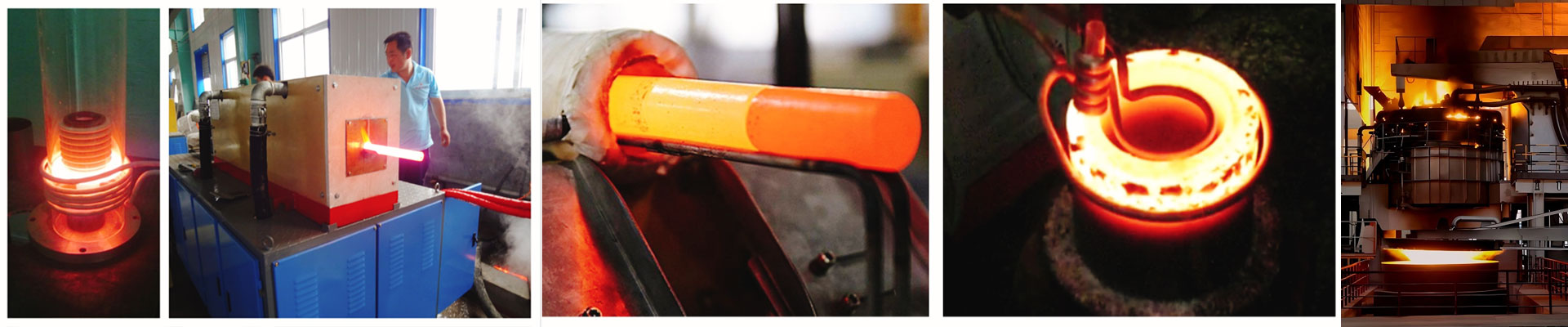
Indian foundries currently rely on diesel generator backup to compensate for grid instability, with industrial electricity costs of INR 8-12 per kWh and diesel generator operating costs of INR 22-32 per kWh. A solar PV induction melting furnace achieves a levelized cost of energy of INR 2.8-5.0 per kWh across a 25-year asset lifetime.
Levelized cost accounts for PV module degradation, battery replacement, inverter service, and routine maintenance. A copper recycling facility melting 4 tons of scrap daily across 300 operating days per year saves INR 28-42 lakh (USD 33,000-50,000) annually by displacing diesel power.
Beyond direct cost savings, the solar PV induction melting furnace eliminates diesel storage requirements, fuel logistics, and exhaust emissions inside foundry buildings. Indoor air quality improves when induction heating replaces open-flame gas or oil-fired crucible furnaces.
Worker health benefits include reduced respiratory exposure, lower noise pollution, and elimination of hot fuel handling during Indian summer conditions. The solar PV induction melting furnace operates at ambient noise levels below 75 dB at one-meter distance.
The solar PV induction melting furnace delivers quantifiable greenhouse gas reductions eligible for international carbon credit markets. The baseline calculation compares grid-plus-diesel electricity consumption of typical Indian foundries against solar PV plus battery displacement, then multiplies the energy difference by India's CEA grid emission factor of 0.79 kg CO2 per kWh.
A 5-ton-per-day solar PV induction melting furnace displaces approximately 2,100 tons of CO2 annually. Verra VCS methodology VM0038 and Gold Standard AMS-III.BK provide recognized issuance pathways, with secondary market prices of USD 6-12 per ton generating INR 10-25 lakh of additional annual carbon credit revenue.
India's Carbon Credit Trading Scheme, launched in 2024 under the Ministry of Power, also accepts verified industrial decarbonization projects. MONTE INTELLIGENCE assists solar PV induction melting furnace clients in compiling Monitoring, Reporting, and Verification documentation, including baseline studies and third-party verification statements.
Carbon credit revenue typically covers 20-35 percent of total solar PV induction melting furnace system financing, materially shortening the effective payback period.
Copper scrap requires medium-frequency induction heating between 1.5 kHz and 3 kHz, with melt temperature of 1085 degrees Celsius and holding time of 25-40 minutes depending on charge geometry. Brass and bronze variants melt at lower temperatures between 880 and 1050 degrees Celsius.
Aluminum scrap grades including extrusion billets, used beverage cans, and turnings melt at 660-720 degrees Celsius, with aluminum's high electrical conductivity demanding higher frequency selection of 3-8 kHz. The solar PV induction melting furnace adjusts power density through closed-loop PID control, holding bath temperature within plus or minus 5 degrees Celsius throughout each melt cycle.
Electromagnetic stirring inherent to induction melting provides uniform alloy composition without mechanical agitators, eliminating a common failure point in gas-fired reverberatory furnaces. Dross formation on aluminum melts drops by 40-60 percent against gas-fired crucible furnaces, increasing metal yield and reducing furnace refractory wear.
The solar PV induction melting furnace recovers an additional 3-5 percent of metal per ton of scrap charged, translating to INR 18,000-30,000 of additional monthly revenue for a 100-ton monthly aluminum recycling operation.
A representative solar PV induction melting furnace installation in Rajkot, Gujarat, supplies a copper ingot manufacturer processing 3.5 tons of copper scrap per day. The configuration includes 280 kWp of rooftop PV, 640 kWh of LiFePO4 storage, and a 1.5-ton medium-frequency induction furnace.
Annual grid plus diesel consumption dropped from 1,180 MWh to 290 MWh, and the foundry now claims Verra VCS carbon credits covering avoided 705 MWh of fossil-based electricity. Payback period after factoring carbon credit revenue: 2.7 years.
A second installation in Coimbatore, Tamil Nadu, supports an aluminum extrusion billet producer running two 8-hour shifts. The solar PV induction melting furnace system includes 420 kWp of ground-mounted PV, 900 kWh of battery storage, and a 3-ton tilting induction furnace. The facility maintains continuous 22-hour daily operation.
Cities such as Coimbatore, Ludhiana, Aurangabad, Indore, and Visakhapatnam offer competitive land pricing, lower labor costs, and state renewable energy subsidies. For nearby hardware integration, MONTE INTELLIGENCE also supplies electric arc furnace and mesh belt furnace product lines.
MONTE INTELLIGENCE delivers solar PV induction melting furnace systems as containerized modules to simplify Indian customs clearance and inland transport. Each 40-foot container holds the induction power supply, control cabinets, hydraulic tilting mechanism, and water cooling skid.
PV array mounting structures arrive as knockdown kits, with on-site assembly completed in 8-12 working days by MONTE INTELLIGENCE's Indian installation partner network. Full-load factory acceptance testing occurs at the Luoyang manufacturing facility before shipment, including a 72-hour continuous melting trial.
Remote monitoring via Indian cellular networks enables 24/7 performance tracking of every solar PV induction melting furnace, with predictive maintenance alerts triggered by trend anomalies in bus voltage, cooling water temperature, and inductor impedance.
Local service engineers in Mumbai, Delhi, and Chennai maintain spare parts inventories for IGBT modules, capacitor banks, and furnace refractories, with 48-hour response time for critical components. Operator training covers induction melting principles, emergency shutdown procedures, and carbon credit MRV data collection protocols specific to Indian regulatory frameworks.
MONTE INTELLIGENCE (Luoyang Monte Intelligent Technology Co., Ltd.) delivers complete solar PV, battery energy storage, and induction melting furnace integration for non-ferrous metal recycling facilities across India, Southeast Asia, Africa, and the Middle East. The engineering team prepares customized feasibility studies including solar resource assessment, load profiling, financial modeling, and detailed CAPEX/OPEX breakdowns.
Request a free technical assessment and quotation for a solar PV induction melting furnace system sized to your specific copper or aluminum recycling throughput target:
Email: helenxu@cnlymonte.com
Web: www.cnlymonte.com
Carbon credit revenue projections reference current Verra VCS and Gold Standard secondary market pricing as of mid-2026, and depend on host country regulations. Solar resource estimates use PVsyst simulation; actual production may vary. Final commercial terms require a site-specific evaluation by MONTE INTELLIGENCE engineers.
">