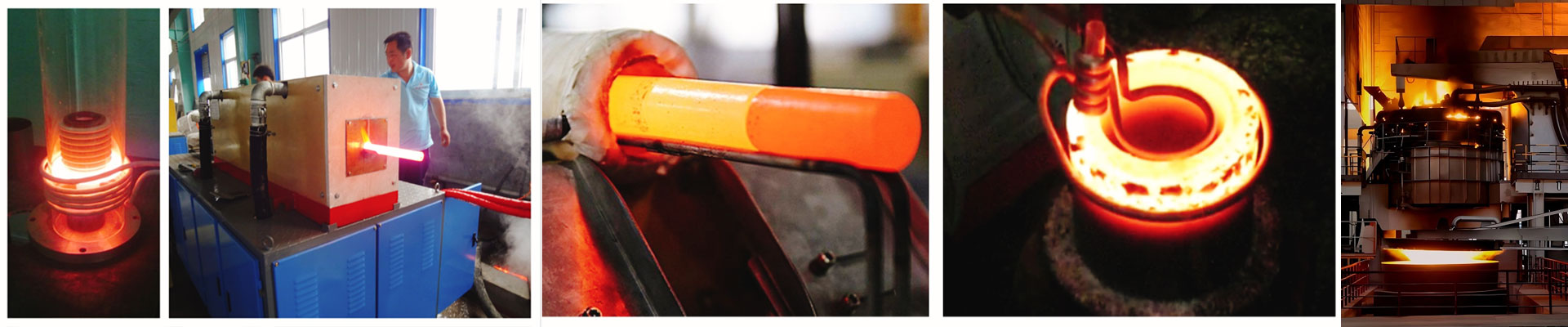
A defining innovation of MONTE INTELLIGENCE's solar induction melting furnace lies in the direct DC-coupled architecture. Traditional solar-to-industrial power chains convert DC from PV panels to AC through inverters (5-10% loss), then convert AC back to DC through rectifiers (another 5-10% loss). The DC-coupled solar PV induction melting furnace eliminates both conversion stages, feeding DC power from solar arrays and battery banks directly into the induction melting DC bus. Comparative field measurements confirm 15-20% higher system efficiency versus inverter-based configurations.
Eliminating the large-capacity inverter (typically 500kW-2MW for industrial melting) saves $40,000-120,000 in upfront equipment cost. Removing the AC-DC rectifier stage in the induction power supply saves an additional $15,000-40,000. Reduced component count simplifies system design while fewer power conversion stages improve overall reliability — fewer components mean fewer potential failure points in the solar induction melting furnace installation.
Battery energy storage transforms a solar induction melting furnace from daytime-only operation into a 24-hour continuous production system. A properly sized lithium-iron-phosphate (LiFePO4) battery bank stores surplus solar generation during peak irradiance hours and discharges steady power through nighttime operations, cloudy periods, and extended grid outages. MONTE INTELLIGENCE sizes each energy storage configuration based on daily melting throughput targets and local solar irradiance profiles. A 10-ton-per-day scrap melting operation in Lagos, Nigeria (5.2 peak sun hours) requires approximately 280kWh of battery capacity matched with 160kWp of PV generation.
LiFePO4 chemistry delivers 6,000+ cycles at 80% depth of discharge, translating to 16+ years of daily cycling for the energy storage melting system. Inherent thermal stability eliminates runaway risk in hot climates where ambient temperatures exceed 40 degrees Celsius. The integrated battery management system monitors cell-level voltage, temperature, and state of charge, automatically balancing cells and protecting against overcharge, over-discharge, and overtemperature conditions across all solar induction melting furnace installations.
Grid electricity for industrial users in Nigeria averages $0.12-0.18 per kWh. Diesel generator operations cost $0.25-0.40 per kWh including fuel, lubricants, maintenance labor, and equipment depreciation. MONTE INTELLIGENCE's solar induction melting furnace achieves a levelized cost of energy (LCOE) of $0.04-0.07 per kWh over a 25-year system lifetime, accounting for PV panel degradation (0.5%/year), battery replacement at year 12-15, and routine maintenance. A foundry melting 10 tons of scrap metal daily across 300 operating days per year realizes annual energy savings of $120,000-180,000 compared to diesel-powered alternatives.
Full return on investment for a complete solar induction melting furnace system typically occurs within 3-4 years of commissioning. Following the payback period, the foundry operates for 21+ additional years with near-zero fuel cost. Beyond direct energy savings, economic benefits include elimination of diesel fuel logistics, reduced furnace maintenance intervals, and access to carbon credit revenue streams under Article 6 of the Paris Agreement.
Induction melting furnaces achieve 85-92% energy efficiency compared to 60-70% for gas-fired crucible furnaces. The solar induction melting furnace processes ferrous scrap including carbon steel, stainless steel, and cast iron, alongside non-ferrous materials including aluminum, copper, brass, and zinc. Electromagnetic stirring inherent to induction melting ensures homogeneous alloy composition and uniform temperature distribution throughout the melt, yielding higher-quality output ingots or billets compared to fuel-fired methods.
MONTE INTELLIGENCE offers induction melting furnace capacities from 50kg to 30 tons per heat. Small foundries processing 500kg daily and regional recycling hubs processing 50+ tons daily find suitable solar induction melting furnace configurations. The complete MONTE INTELLIGENCE product ecosystem — including Electric Arc Furnaces for large-scale steelmaking and Bogie Hearth Furnaces for heavy industrial processing — adapts to solar PV plus energy storage power configurations.
Dual-frequency capability (500Hz-2000Hz) automatically optimizes energy coupling for different metal types and charge geometries. Lower frequencies penetrate deeper into large ferrous charges while higher frequencies concentrate heating at the surface for smaller non-ferrous loads. IGBT-based power modules with digital signal processor control maintain stable melting power despite fluctuations in solar irradiance — ramping output from 10% to 100% of rated power within 500 milliseconds.
The closed-loop water cooling system with dry cooler heat rejection eliminates cooling tower makeup water requirements. Integrated remote monitoring via 4G/GSM enables real-time diagnostics and predictive maintenance for solar induction melting furnace installations worldwide. The modular architecture supports capacity expansion by adding PV panels and battery racks without replacing the core furnace. For comprehensive specifications, explore the MONTE INTELLIGENCE product catalog.
The global scrap metal recycling sector reached $58.7 billion in 2024, with developing economies driving over 55% of demand growth. The World Bank projects municipal solid waste generation increasing 70% by 2050, with metals representing 3-4% of the waste stream. Converting metal waste into secondary raw materials via solar induction melting furnace technology addresses both energy access limitations and waste management challenges across developing countries.
Nigeria, Kenya, India, Bangladesh, and Pakistan have introduced import substitution policies favoring domestic metal recycling over scrap exports. A solar induction melting furnace enables local foundries to compete against imported finished metal products by eliminating the energy cost disadvantage. As international carbon border adjustment mechanisms expand to cover steel and aluminum products, solar induction melting furnace operators gain competitive advantage through verifiable low-carbon production credentials.
MONTE INTELLIGENCE delivers complete project support for solar induction melting furnace installations worldwide. Pre-project services cover solar resource assessment, electrical load analysis, system sizing with energy balance calculations, and financial modeling. Manufacturing occurs at the ISO-certified facility in Luoyang, China, with all furnaces undergoing full-load factory acceptance testing before containerized shipment.
On-site services include civil works guidance, mechanical installation, electrical commissioning with grid-forming inverter configuration, operator training covering melting procedures and system maintenance, and ongoing remote performance monitoring. The solar induction melting furnace integrates with existing scrap handling equipment including shredders, balers, and conveyors — creating a seamless material flow from incoming scrap to finished metal products.
MONTE INTELLIGENCE (Luoyang Monte Intelligent Technology Co., Ltd.) specializes in electric arc furnaces, induction melting furnaces, mesh belt furnaces, bogie hearth furnaces, and integrated solar PV plus energy storage melting systems for off-grid applications. MONTE INTELLIGENCE supplies furnace equipment to customers across Africa, South Asia, the Middle East, and Southeast Asia, with a reputation for reliable performance, competitive pricing, and responsive after-sales support.
Request a free technical feasibility assessment with customized quotation for a solar PV induction melting furnace system:
Email: helenxu@cnlymonte.com
Web: www.cnlymonte.com
Performance projections are based on system simulation models validated against operational field data. Actual results vary with site-specific solar irradiance, ambient temperature, scrap composition, and operating practices. A site-specific feasibility study is recommended before project commitment.
">