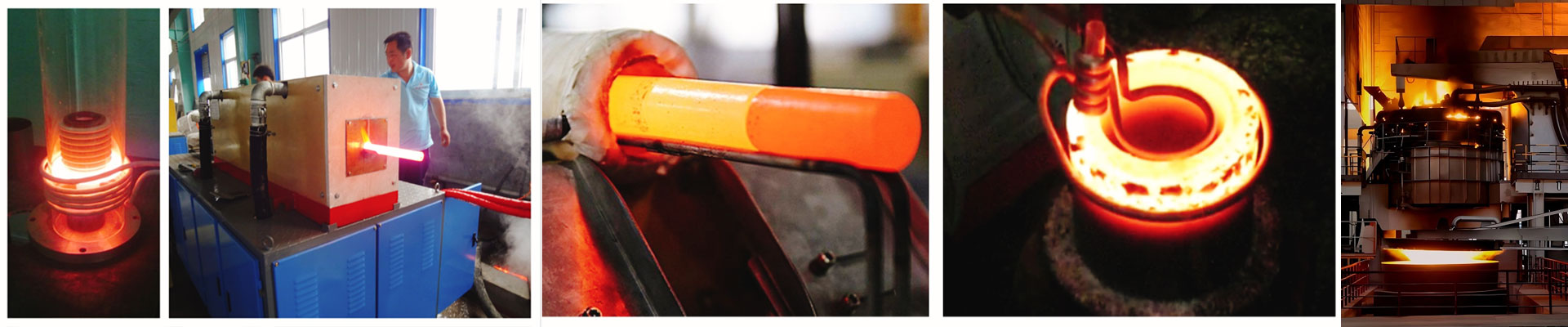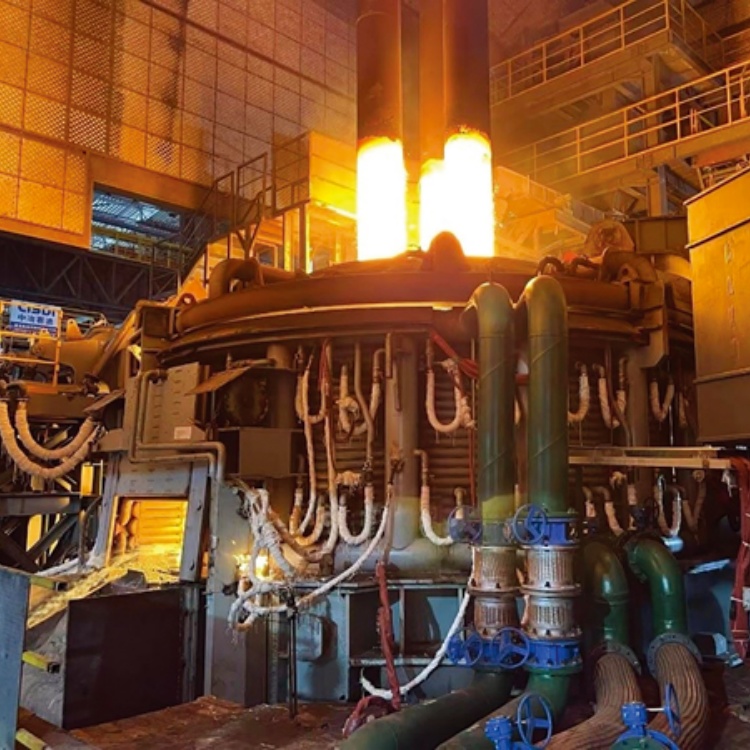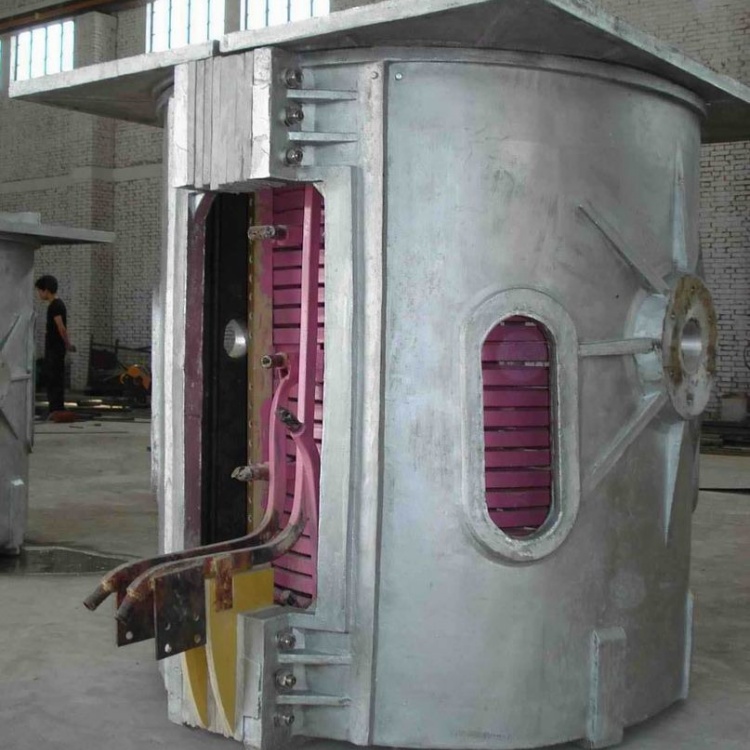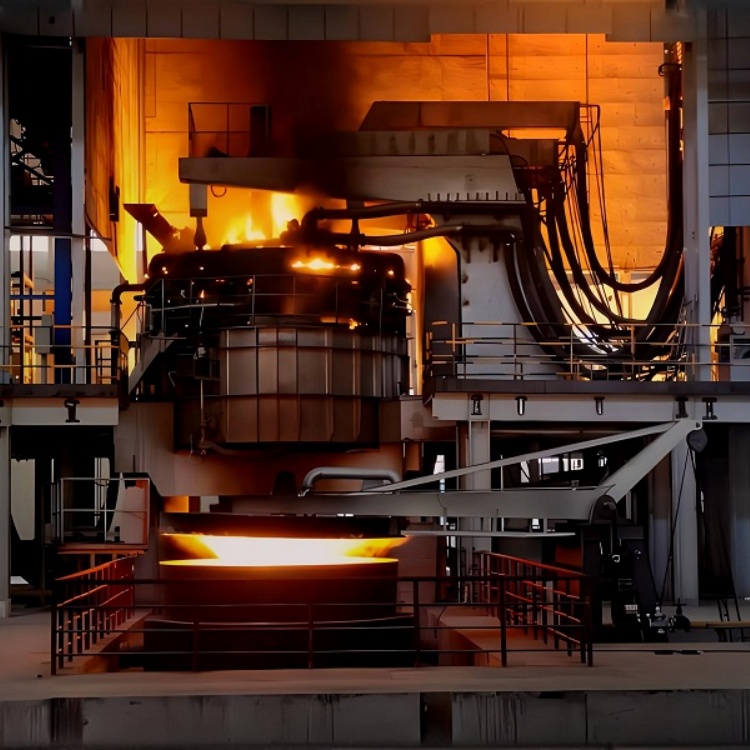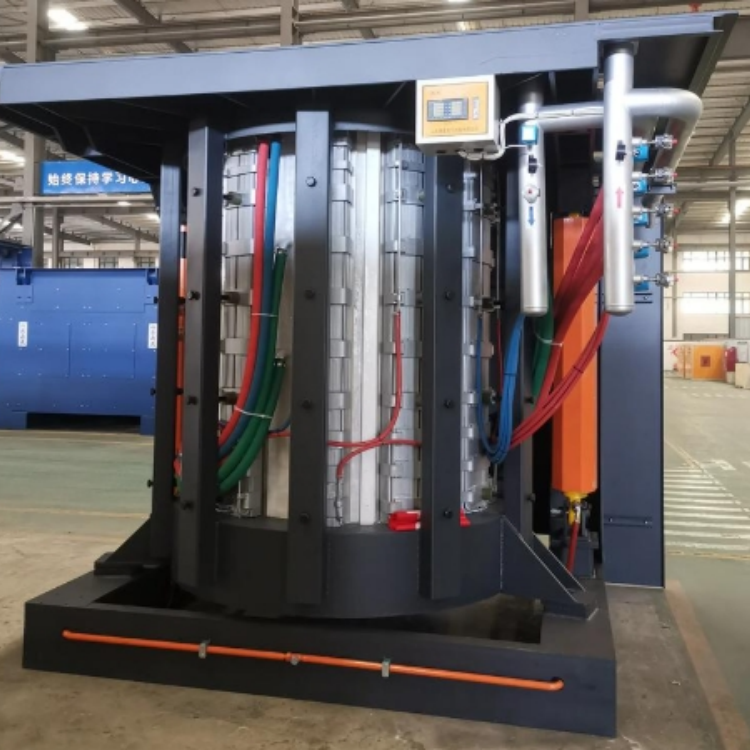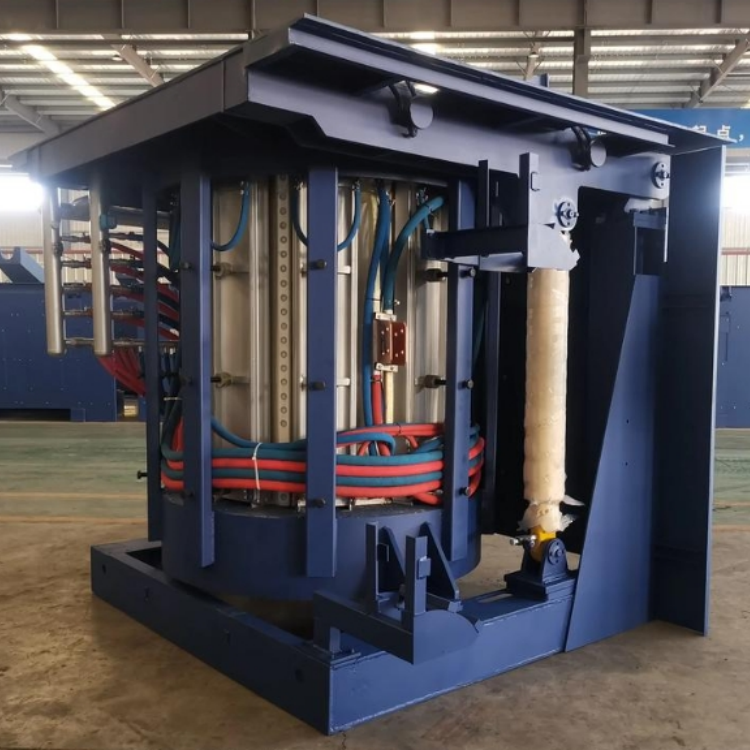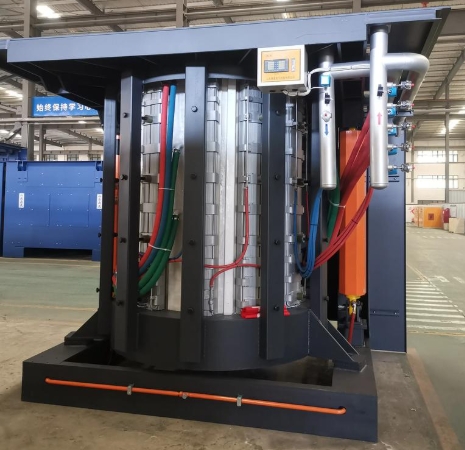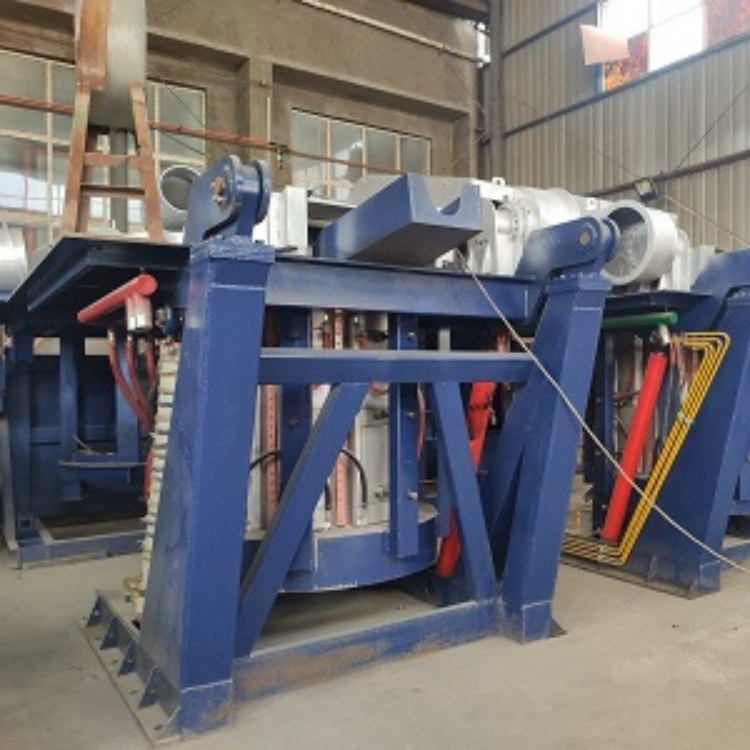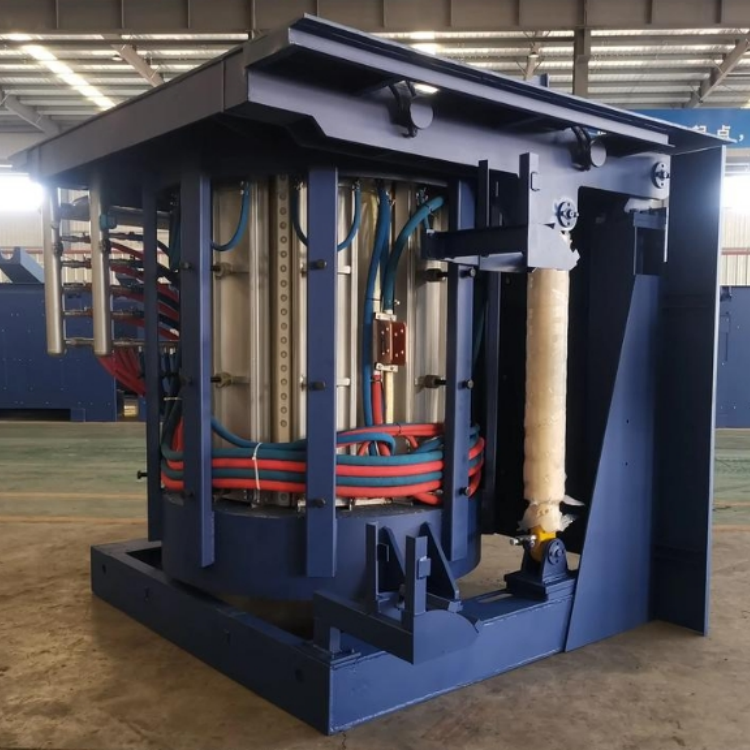
The material pouring is more thorough, reducing residual loss. Thanks to the tiltable furnace structure, after smelting, the molten metal can be completely poured into the casting mold or subsequent processing equipment through precise angle adjustment (usually capable of flexible rotation within a 360° range). Compared with fixed furnaces, it can reduce the metal residual amount by 5%-8%. Especially for the smelting of precious metals, high-purity alloys and other materials, it greatly improves the raw material utilization rate and directly reduces production loss.
The energy utilization rate is higher, and the smelting efficiency is significantly improved. Induction heating itself has the characteristics of rapid temperature rise and concentrated energy. The tiltable design, combined with the optimized layout of induction coils, can make the magnetic field distribution more uniform, so that the materials in the furnace are heated more fully. The heating rate is 15%-20% higher than that of traditional furnaces. At the same time, heat loss during the transfer of molten metal can be avoided in the pouring process, further reducing energy waste. The unit energy consumption is reduced by about 10%, which is particularly suitable for batch continuous production scenarios.
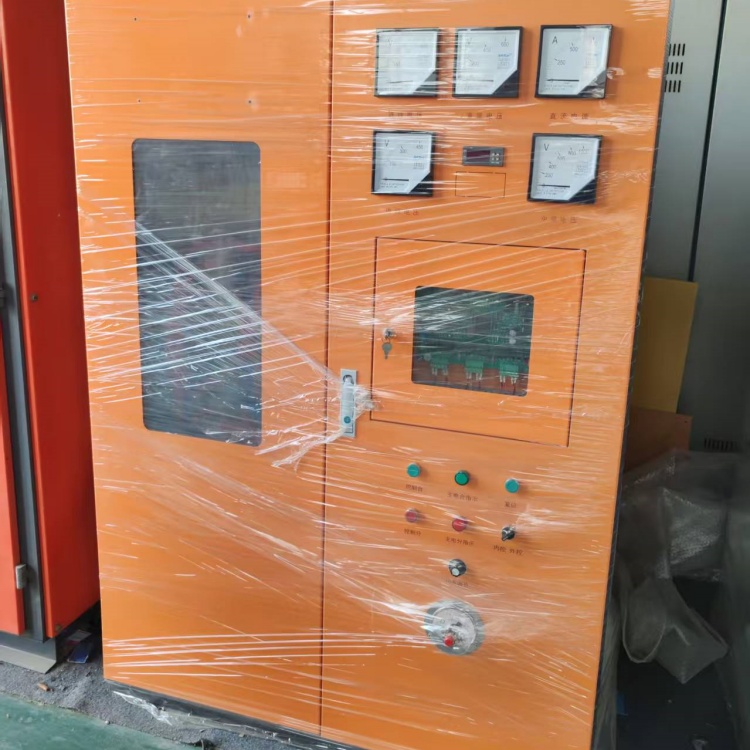
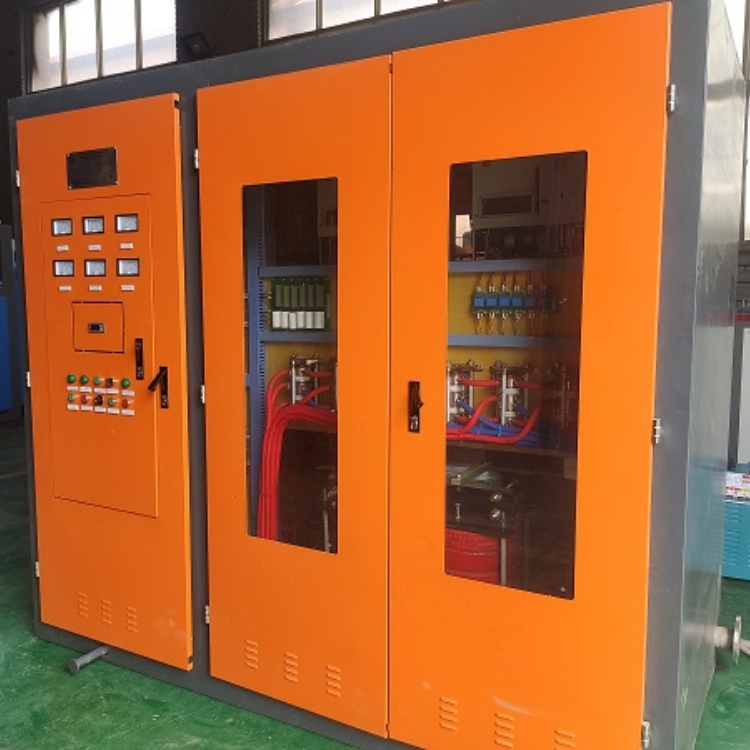
The operation is flexible and safe, reducing labor costs. The tilting system driven by electricity or hydraulic pressure can realize automatic tilting angle control through the control panel, with an accuracy of ±1°, replacing the tedious operation of traditional manual scooping or pouring. It not only reduces the labor intensity of workers but also reduces the safety hazard of splashing high-temperature molten metal. Some high-end models are equipped with intelligent sensing systems, which can automatically adjust the tilting speed according to the material liquid level, further improving the operational safety and stability.
It has a wide range of applications and meets diverse production needs. Whether it is the smelting of ferrous metals (such as iron and steel), non-ferrous metals (such as copper, aluminum, zinc), or special alloys (such as superalloys, precision alloys), the tiltable induction melting furnace can achieve precise adaptation by adjusting parameters such as power and tilting angle. Especially in small-batch and multi-variety production, its characteristics of rapid material change and flexible pouring can greatly shorten the production switching time, meeting the diverse processing needs of aerospace, auto parts, precision casting and other fields.
The furnace body is easy to maintain, prolonging the service life of the equipment. The tilting structure design facilitates operators to inspect and maintain core components such as the furnace lining and induction coil. Daily maintenance can be completed without frequent disassembly of the furnace body, reducing equipment downtime. At the same time, the scouring force of molten metal on the furnace lining is more uniform during pouring, which can avoid local excessive wear, extend the service life of the furnace lining by more than 20%, and reduce equipment maintenance costs.