Metal Heat Treatment
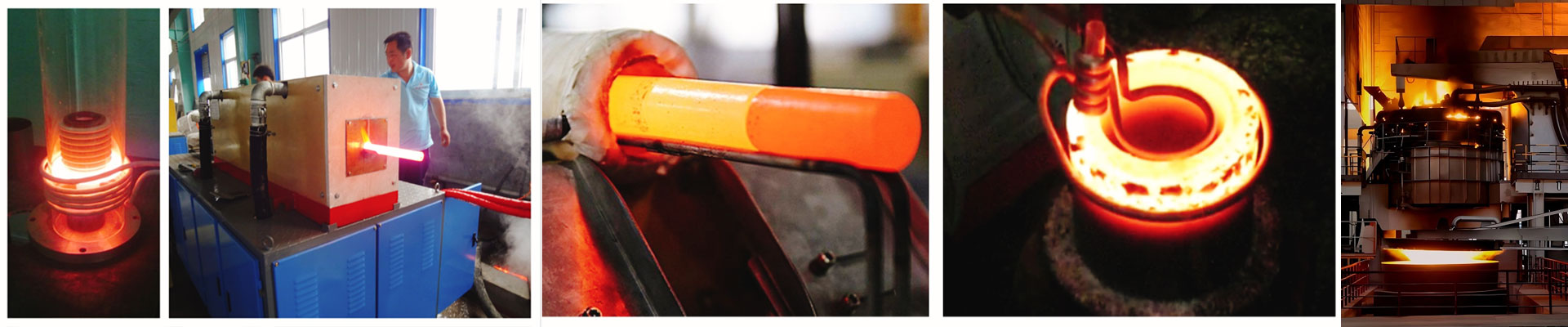
Quenching: Heating the surface or entire body of metal parts such as gears, bearings, and tools, followed by rapid cooling to increase hardness and wear resistance (e.g., surface quenching of automobile transmission gears).
Annealing: Heating cold-worked metal workpieces and cooling them slowly to eliminate internal stress and improve plasticity (e.g., annealing of cold-rolled steel sheets).
Tempering: Reheating after quenching to adjust hardness and reduce brittleness (e.g., tempering of tool steel after quenching).
Normalizing: Heating followed by air cooling to refine grains and make the workpiece structure uniform (e.g., normalizing of castings).
Metal Joining and Forming
Welding: Locally heating the contact surfaces of metal workpieces to melt and join them (e.g., brazing of copper-aluminum pipes, welding of wire terminals).
Hot Assembly/Disassembly: Utilizing the thermal expansion and contraction properties of metals, heating parts such as bearings and gears to expand them for easy installation on shafts; or heating rusted bolts and nuts to loosen them for easy removal.
Forging and Hot Upsetting: Heating metal billets to a plastic state and forming them through forging (e.g., hot upsetting of bolts and rivets).
Local Heating Treatment
Coating/Rust Removal: Heating the metal surface to soften paint, coatings, or loosen rust layers for easy cleaning (e.g., surface treatment during the renovation of old equipment).
Thawing and Preheating: Heating frozen metal parts to thaw them, or preheating workpieces before welding to prevent cracks (e.g., preheating pipes for welding in low-temperature environments).
Local Straightening: Heating the deformed parts of metal components and applying external force for straightening (e.g., local bending correction of mechanical parts).
Heating of Special Materials
Heating conductive materials (such as graphite and certain semiconductor materials) for experiments or specific processes (e.g., preheating of graphite molds).
Basic Composition of the Equipment
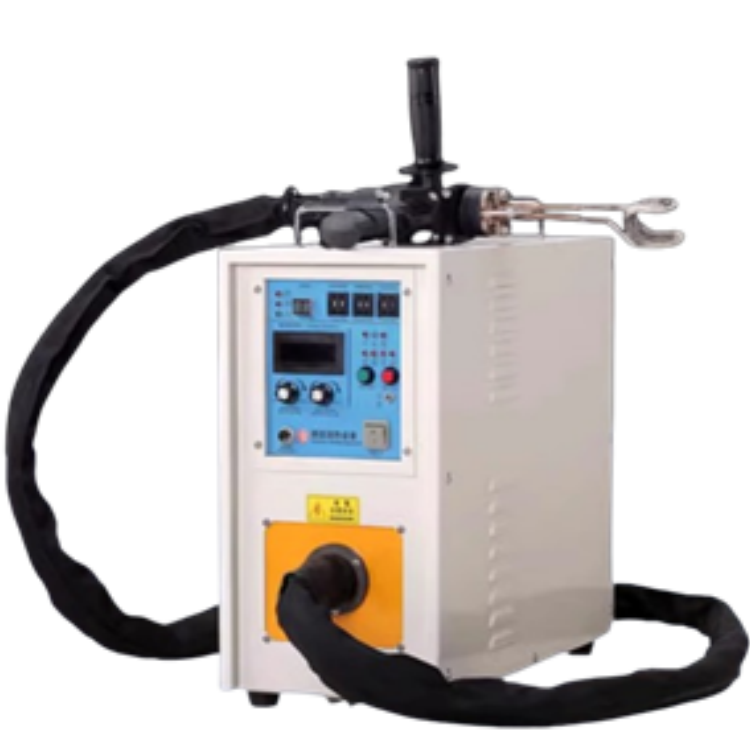
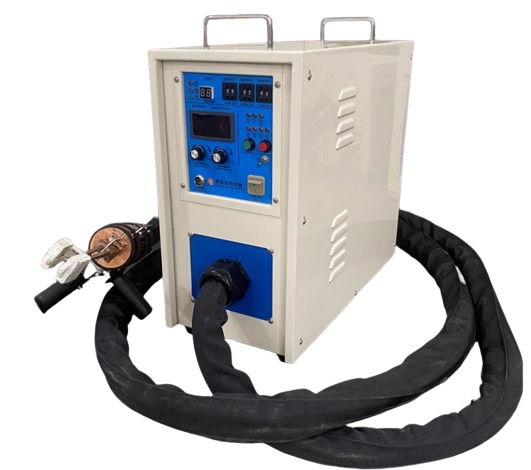
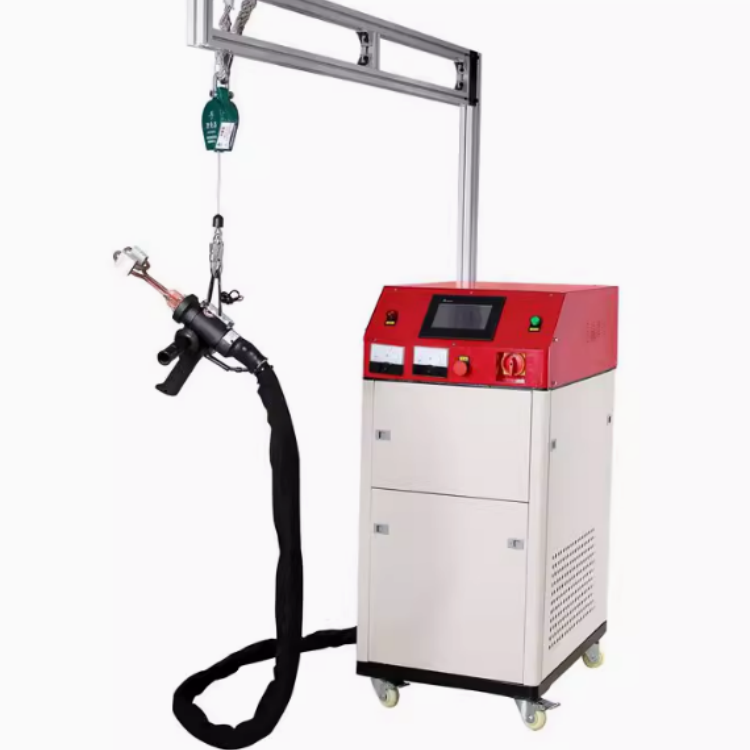
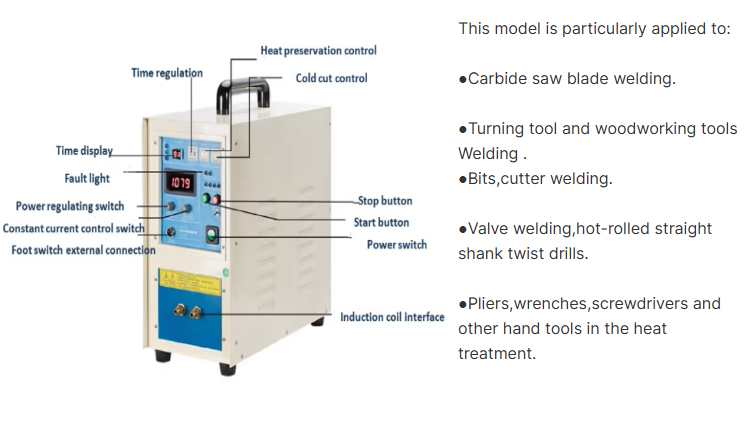
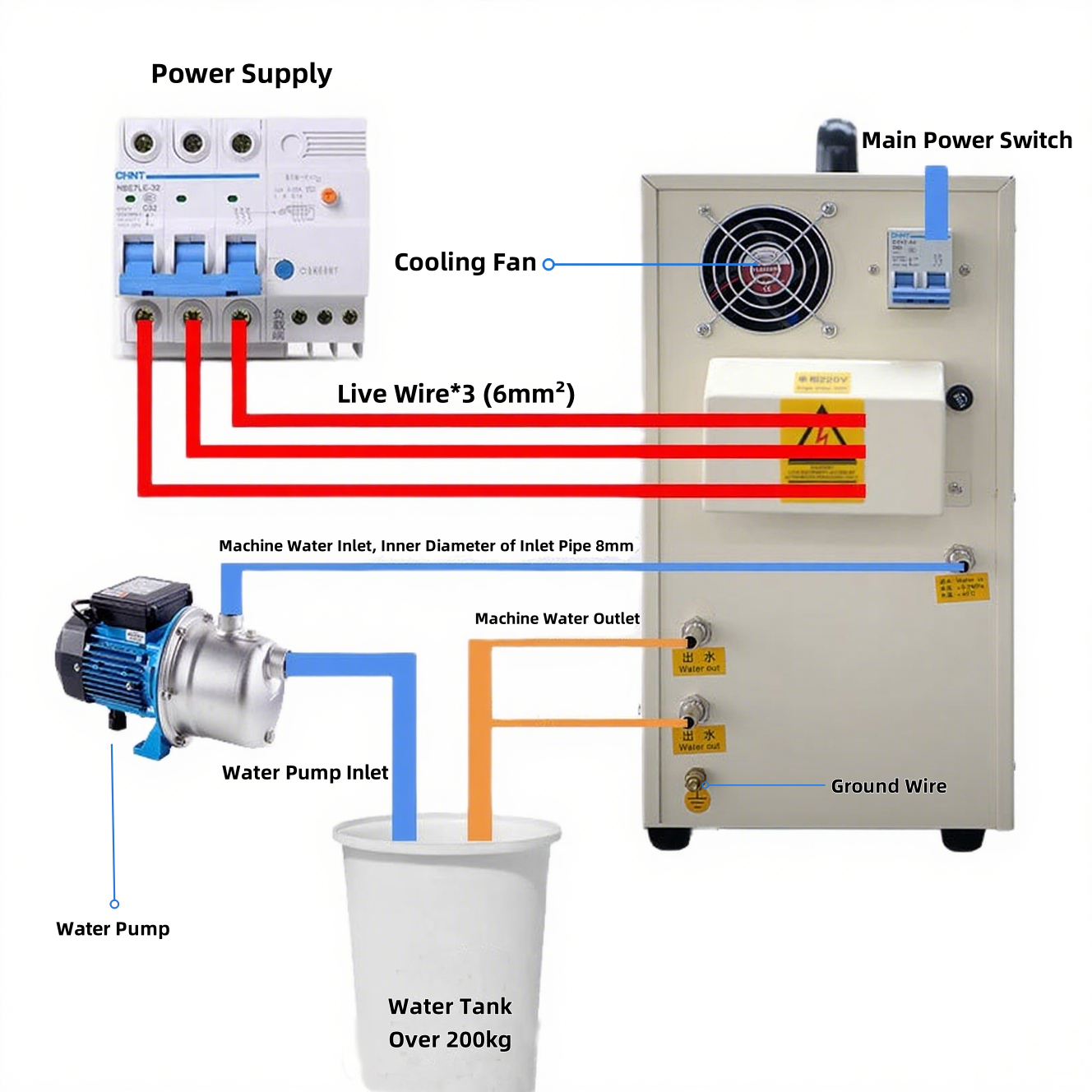
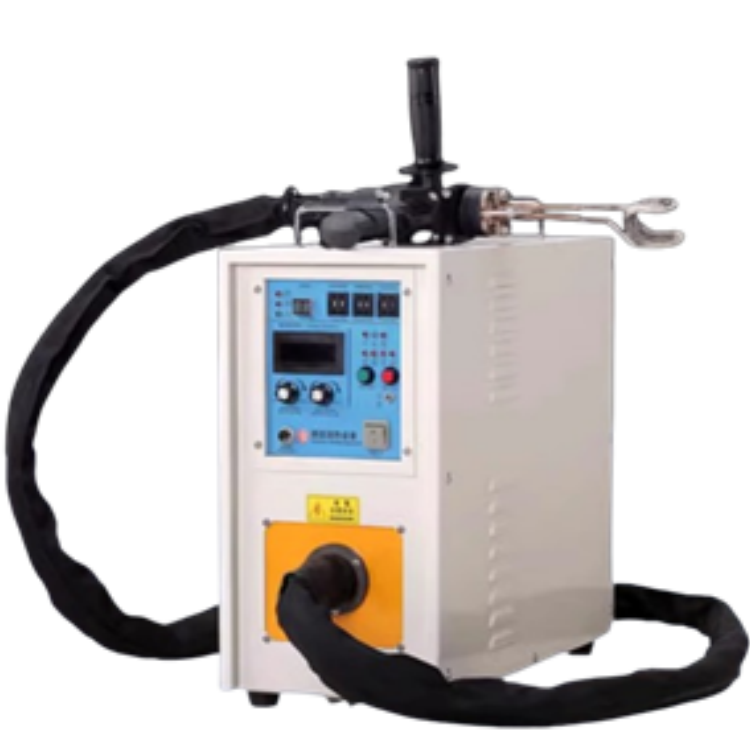
Handheld heating coil heating equipment usually consists of three core components, which work together to achieve the heating function:
Host (Power Module)
As the "power source" of the equipment, it is responsible for converting municipal electricity (alternating current) into high-frequency alternating current. The host usually contains components such as rectifiers, inverters, and resonant capacitors, and can adjust the output power (generally ranging from several hundred watts to several kilowatts) and frequency (commonly 10kHz - 400kHz) according to heating requirements.
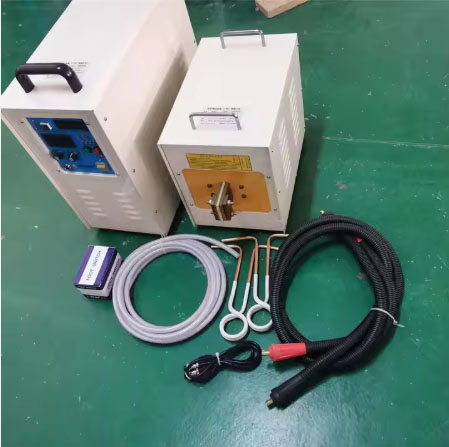
Handheld Heating Coil
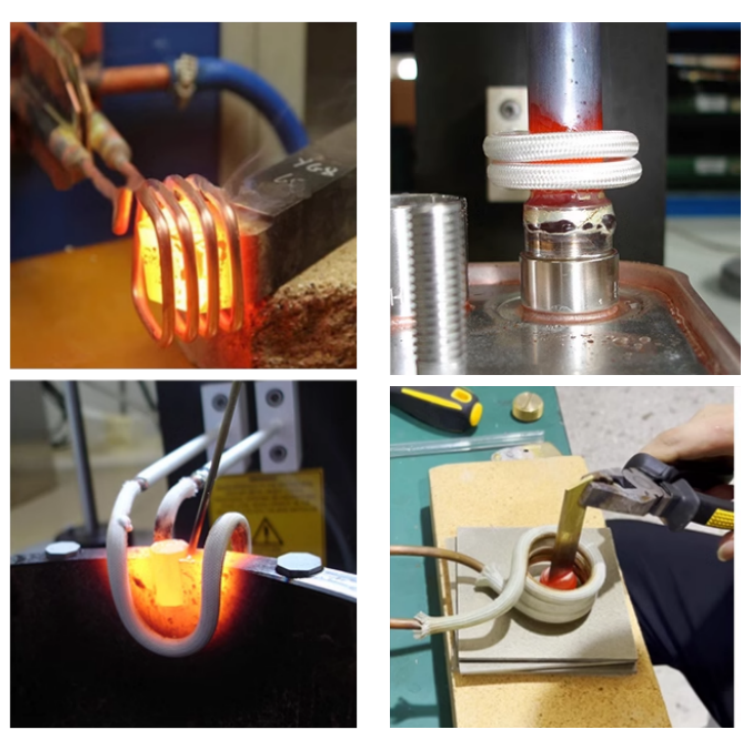
It is the part that directly acts on the object to be heated. It has various shapes (such as circular, horseshoe-shaped, flat-shaped, etc.) and can be flexibly replaced according to the shape of the workpiece. The coil is made of high-temperature-resistant insulated wires (such as copper wires coated with ceramics or silica gel). When high-frequency alternating current passes through the coil, it will generate a high-frequency alternating magnetic field around it.
Connecting Cable
It is used to connect the host and the handheld coil. It contains wires for transmitting high-frequency current and (in some equipment) signal wires for controlling the coil switch. The cable must have the characteristics of high-frequency resistance, high-temperature resistance, and good flexibility to facilitate handheld operation.