
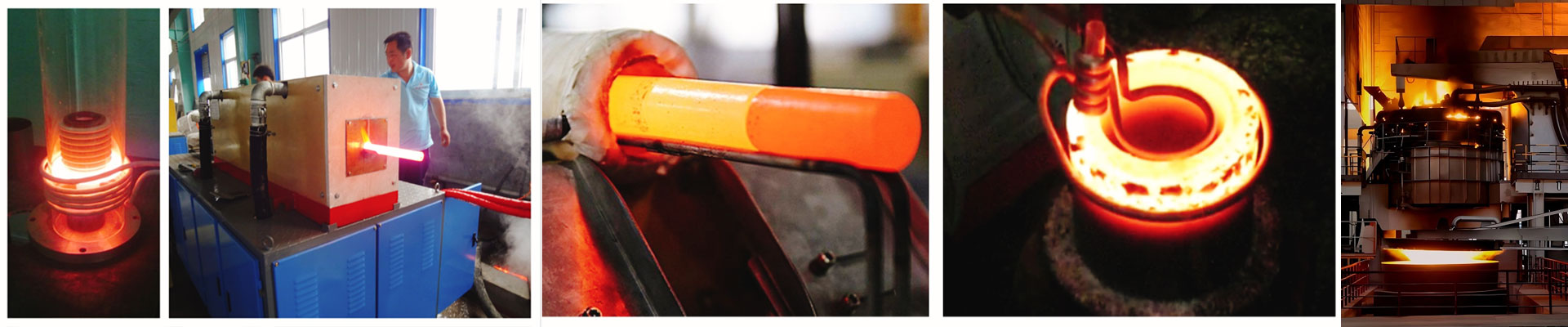
In today competitive market, maximizing arc furnace performance while melting scrap efficiently is crucial for profitability.
Heat Transfer Mechanisms Inside an Arc Furnace
Arc Radiation at approximately 35 percent: Direct radiant heat from electrode arcs to exposed scrap surfaces
Convection at approximately 40 percent: Superheated atmosphere transfers heat to all scrap surfaces
Pool Conduction at approximately 25 percent: Once bath forms, conducted heat melts remaining solids from below
Scrap Quality Grading and Residual Management
Busheling: Clean sheet and tinplate clippings for high-quality products
Number 1 HMS: Heavy melt steel one quarter inch plus thick for general purpose
Number 2 HMS: Lighter mixed steel under one quarter inch for cost-effective bulk
Advanced Operational Techniques
Oxygen Injection: Natural gas and O2 lances provide additional chemical energy at approximately 3.5 kWh per Nm3 O2. Carbon injection creates foamy slag improving arc stability.
Power Management: Long arc during bore-down maximizes energy delivery. Short arc during flat-bath reduces electrode wear.
Slag Engineering: Basicity ratio CaO to SiO2 maintained between 1.8 and 2.5. MgO saturation prevents refractory dissolution.
Industry 4.0 Integration
Predictive maintenance reducing unplanned downtime
Real-time composition prediction enabling closed-loop alloy adjustments
Energy optimization across variable electricity pricing periods
Remote monitoring supporting distributed expertise deployment
Mastering scrap melting in electric arc furnaces combines art and science for competitive advantage.
